A slipping clutch is a reason to have the car inspected. It is not proof that a full clutch kit is due.
The quick answer
The clutch is a system, not a single part. The friction disc sits alongside a pressure plate, a release bearing, a release mechanism, hydraulics or a cable, a linkage and the flywheel. ZF Aftermarket, one of the major clutch manufacturers, points out that slip can have more than one cause, and that a clutch or a flywheel can end up replaced on a wrong diagnosis. A clutch that will not disengage can just as easily involve the release system, the hydraulics, the linkage or the pilot bearing as the friction disc itself.
So the useful first step is not ordering parts. It is confirming which part of the system has actually failed, on your car, before anyone commits you to a clutch kit, a flywheel or a hydraulic repair.
Symptoms that justify an inspection
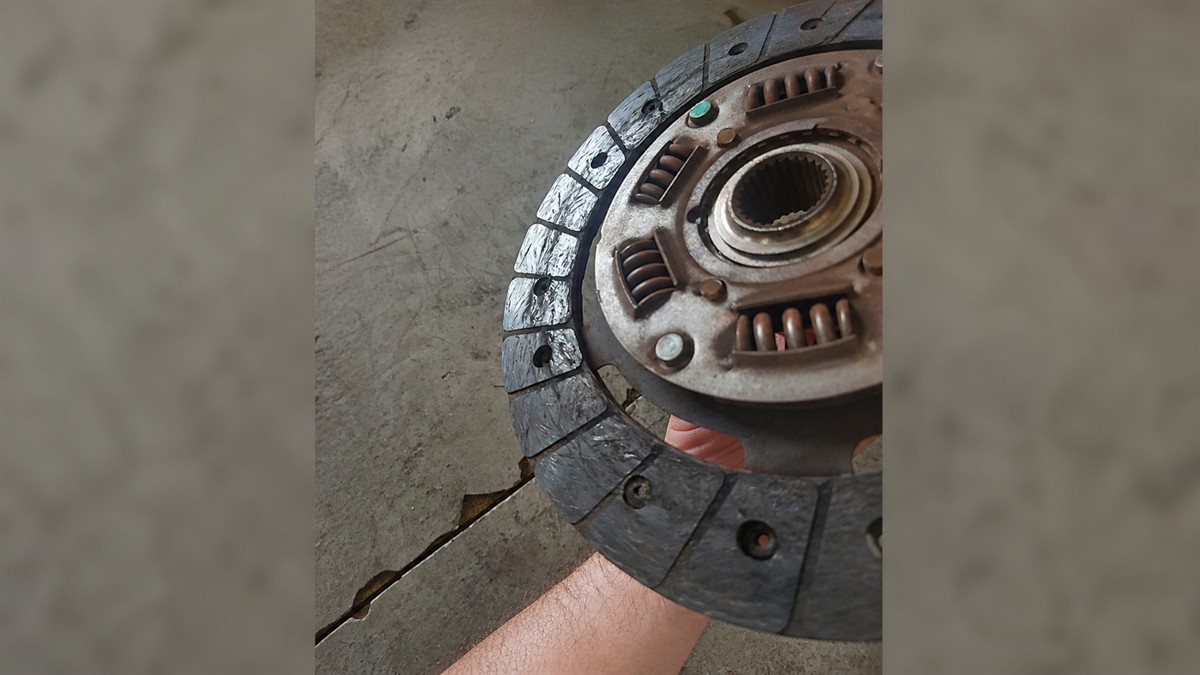
Book a check if you notice any of these:
- Slip. Engine revs climb but road speed does not follow, usually worst in a high gear, up a hill or under hard acceleration.
- Gears that fight you. First or reverse are hard to engage, the box crunches on the way in, or the car creeps with the pedal fully down.
- Judder on pull away. The car shudders as the clutch takes up, rather than moving off smoothly.
- A change in pedal feel. The bite point has moved, the pedal has gone heavy, light or spongy, or it stays on the floor.
- New noises. A rumble, squeal or rattle that appears or disappears as you press the pedal, or a noise at idle that changes when you dip the clutch.
- A burning smell after heavy traffic or a steep climb.
- Fluid loss around the clutch pedal area or under the car on a hydraulic system.
A moved bite point is worth mentioning, but on its own it does not prove the friction disc is worn. It points at the clutch system without saying which part. A burning smell needs the same treatment: it is a reason to have the car checked, not proof of clutch slip, because an oil leak onto hot components, dragging brakes and an electrical fault can all produce a similar smell.
Faults that can feel exactly like a worn clutch
This is where money gets wasted. Before the gearbox comes out, rule these out:
- The hydraulic circuit. A leaking or failing master or slave cylinder, low fluid, or air in the system changes how far the clutch actually releases, no matter how healthy the disc is.
- The cable or linkage. Wear, stretch or an adjustment that has drifted will change pedal travel and take-up.
- The release bearing and release mechanism. These carry their own wear and their own noises.
- The pilot bearing. A failure here can stop the clutch disengaging cleanly.
- The gearbox itself. Difficult selection is not automatically a clutch problem. Worn synchronisers and internal wear produce the same complaint.
- The flywheel. Judder and noise can come from flywheel condition rather than the friction surfaces on the disc.
A good workshop also looks for whatever damaged the old parts, so the same failure does not repeat on a new kit.
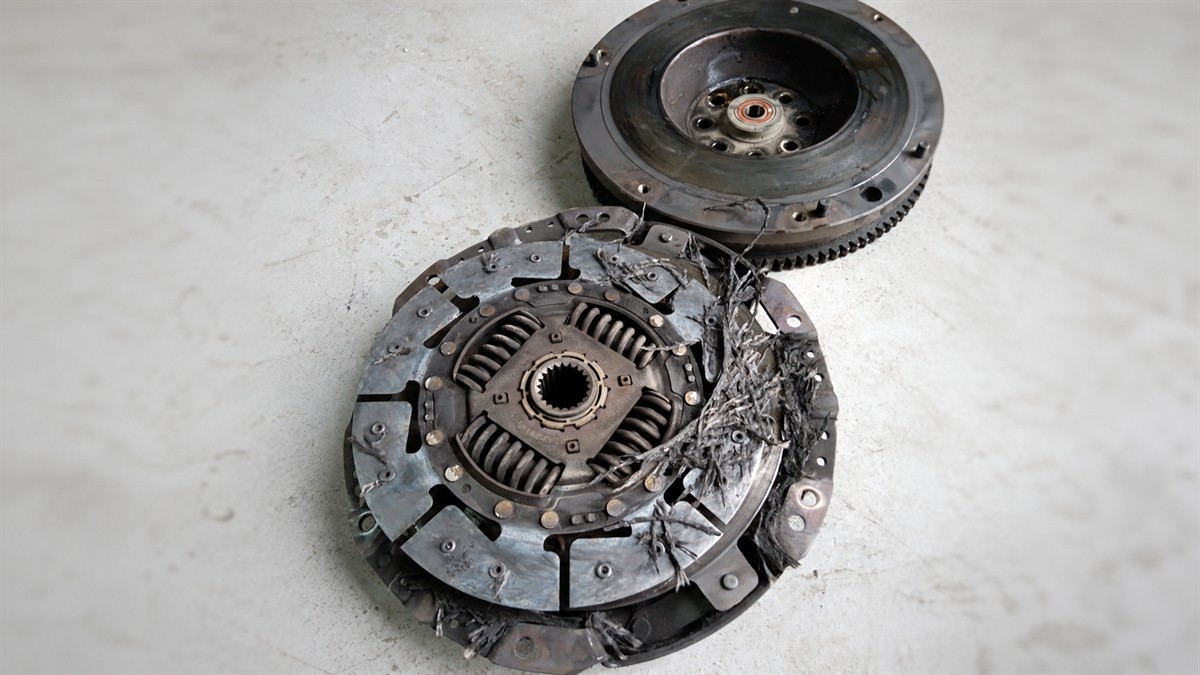
What a clutch kit may include
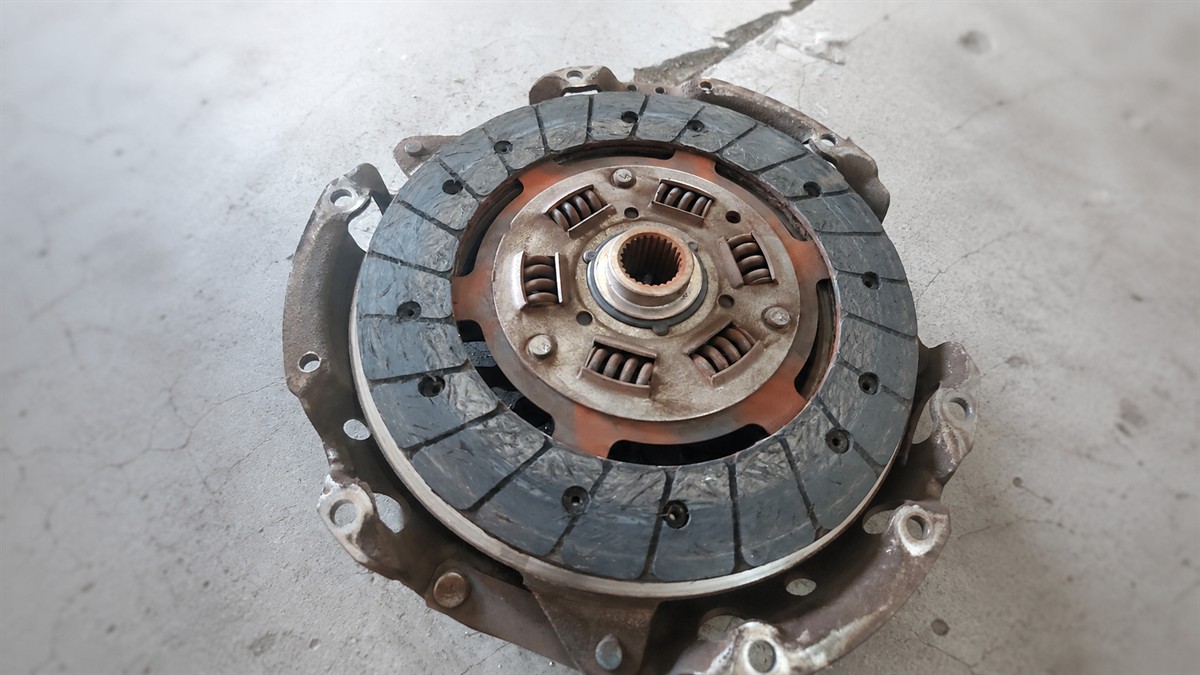
Kit contents vary by vehicle, so treat this as the shape of the job rather than a fixed list:
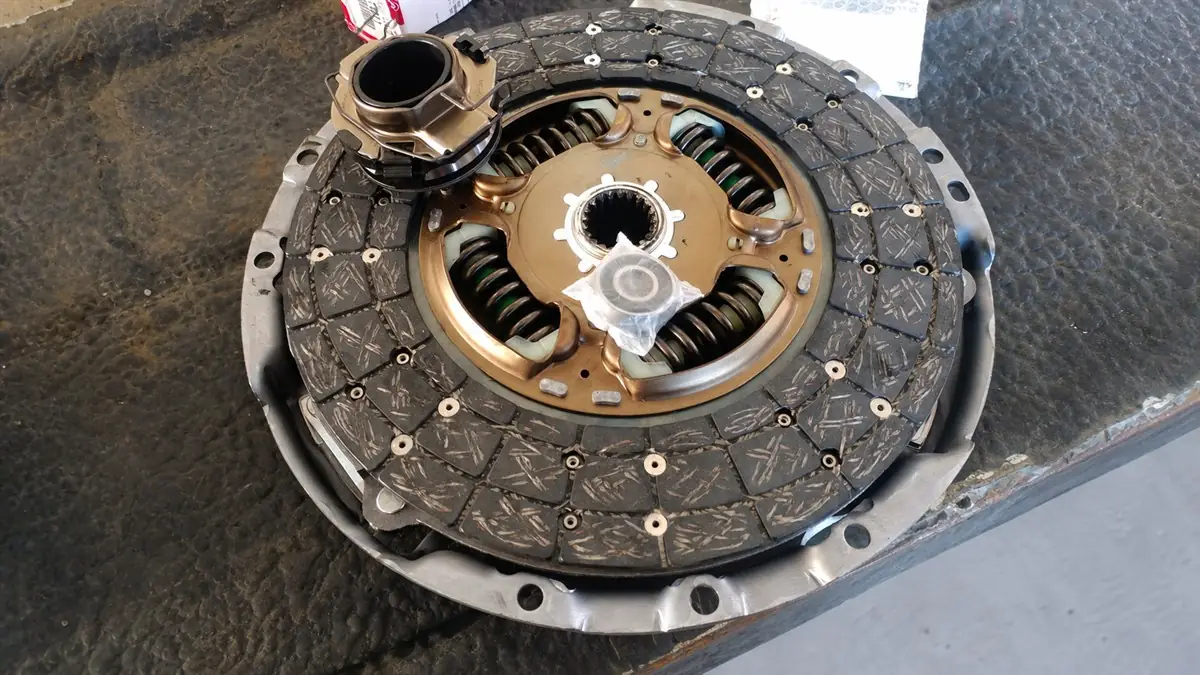
- The friction disc.
- The pressure plate, sometimes called the clutch cover.
- The release bearing.
- On some vehicles, a concentric slave cylinder that sits inside the bellhousing and is replaced while access is open.
- Fitting items where the manufacturer specifies them, such as single-use bolts.
The flywheel is a separate decision on most vehicles and is not automatically part of a kit. Hydraulic parts outside the bellhousing, seals and gearbox oil are usually quoted separately too.
How a workshop confirms the diagnosis
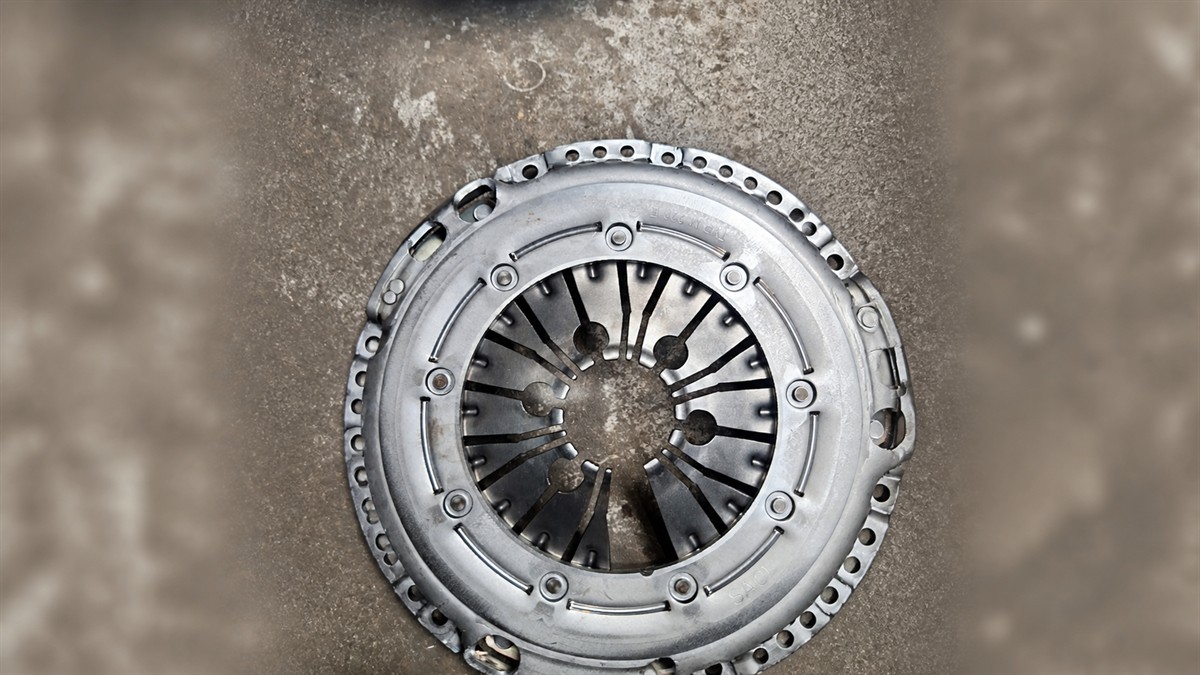
A sensible sequence looks like this:
- Listen to the history. What the car does, when it started and whether it is getting worse.
- Road test when it is safe to do so. Reproducing the symptom beats working from a description alone, but a car that will not hold drive or select gears reliably is checked in the workshop instead.
- Check the operating side. Pedal travel and free play, adjustment, fluid level and condition, leaks, air in the system, and whether the release mechanism moves through its full stroke.
- Separate gearbox complaints from clutch complaints where the symptom is difficult selection.
- Strip only when the evidence points there. Disc, pressure plate, bearing and flywheel condition are confirmed once the gearbox is out and the parts are visible.
That last point is honest rather than evasive. Some findings cannot be confirmed until the assembly is exposed, which is why a clutch quote often carries a conditional line.
What the replacement job actually involves
Getting to the clutch. The gearbox has to be separated from the engine before the clutch assembly can be reached. Depending on the layout, that can mean removing driveshafts, ancillaries, mountings or subframe components first.
Assessing what comes out. With the old assembly off, the flywheel, the crankshaft and gearbox seals and the release parts are inspected. This is the point where the flywheel question gets a real answer instead of an assumption.
Fitting and finishing. New parts go in to the manufacturer’s specification, torque figures and alignment. A hydraulic system is refilled and bled, and the car is road tested before it goes back to you.
The parts bill for two different cars can be similar while the labour differs a lot, purely because of how much has to come apart to reach the bellhousing.
Flywheel and dual-mass flywheel decisions
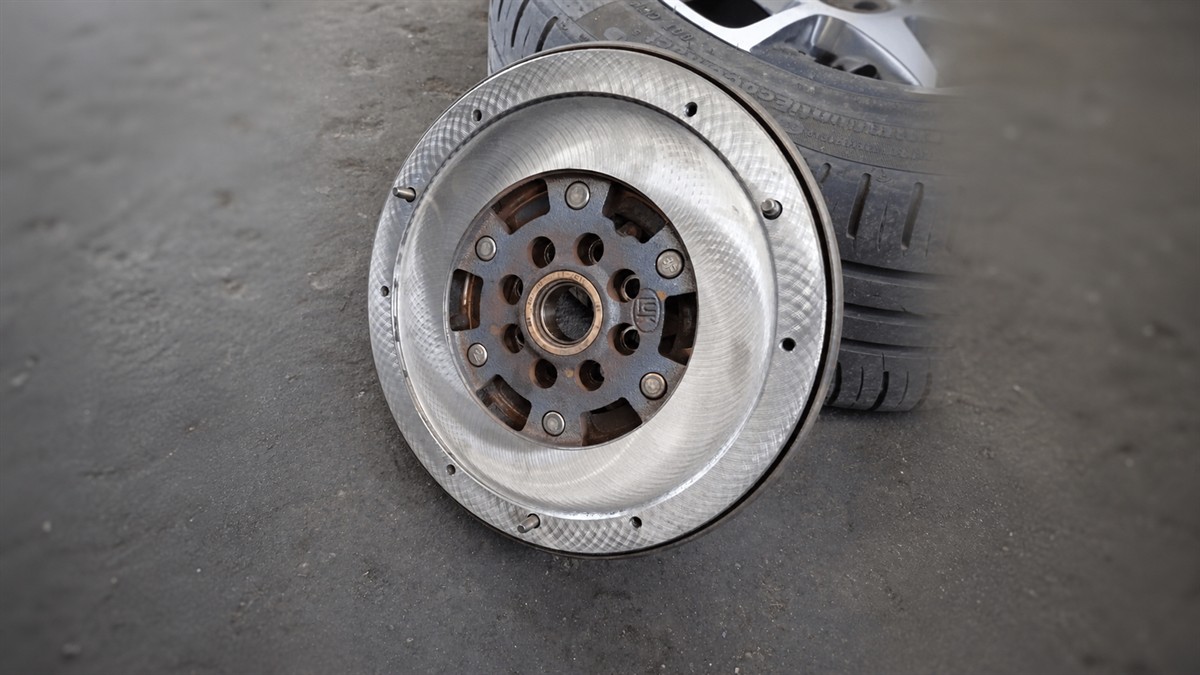
A dual-mass flywheel cannot be judged reliably from a single symptom. ZF Aftermarket is clear that its condition and remaining life have to be inspected and tested to the applicable procedure, which happens with the gearbox out. A workshop that gives a definite flywheel answer over the phone is guessing.
A single-mass flywheel is not automatically machinable either. Whether the friction face may be skimmed at all, and how much material may come off, is set by the vehicle manufacturer and then judged against what the flywheel actually measures once it is out. If either the manufacturer limit or the measured condition rules it out, the flywheel is replaced. Our Randburg article on clutch and brake work goes into the local, combined clutch-and-brake side of this in more detail.
Either way, the flywheel decision is made on inspection, and it is a common reason a final invoice lands above an early estimate.
Why clutch quotes differ so much
No fixed rand figure is useful, because these variables move it:
- Vehicle layout and access. Labour time is driven by how the gearbox comes out.
- Whether the flywheel is reused, machined or replaced, and whether it is single-mass or dual-mass.
- Kit specification and contents, which vary by vehicle and by supplier.
- Whether hydraulic parts, seals or a concentric slave cylinder are included.
- Whether related faults are found once the assembly is open.
- Consumables such as gearbox oil and single-use fittings.
A number given before your car has been seen is an estimate built on assumptions. A number given after inspection is a quote.
What a clutch quote should spell out
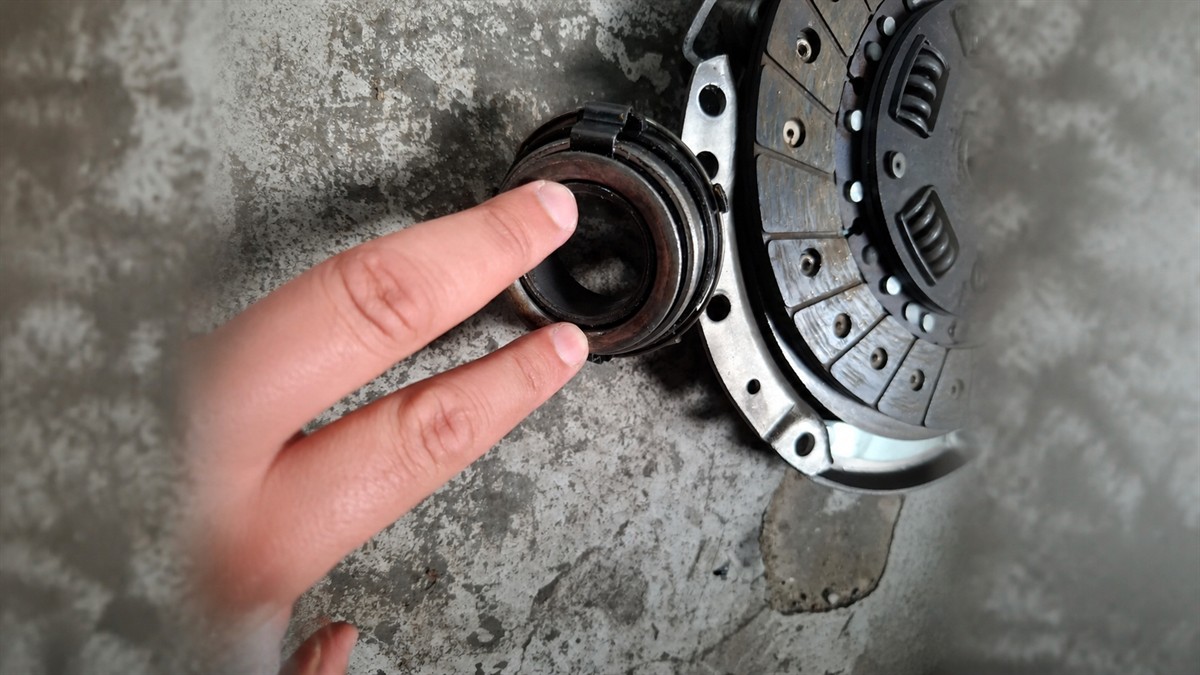
Before you compare two numbers, check that each one says yes or no to these:
- Is the flywheel included, and is that for inspection only, machining or replacement?
- Is the release bearing in the price, or listed separately?
- Is a concentric slave cylinder included where the vehicle has one inside the bellhousing?
- Are the external hydraulic parts, the master and slave cylinder, covered or excluded?
- Is gearbox oil included, and how much is needed?
- Are single-use bolts and fittings included where the manufacturer specifies them?
- Are crankshaft and gearbox seals included if they are found leaking?
- What happens to the price if something else is found once the gearbox is out?
Two quotes that look far apart are often quoting different jobs.
How far can you keep driving?
Stop driving and arrange a tow or a recovery if the clutch no longer holds drive, the pedal has gone to the floor and stayed there, you cannot select gears reliably, or you get a burning smell together with a loss of drive.
If the symptom is mild and the car still feels normal, phone the workshop before you drive anywhere. Describe what the car is doing and let them tell you whether to bring it in under its own power or have it collected. We cannot judge that from an article, and a clutch that is slipping slightly today can fail completely on the next hill.
What to send us for a useful answer
Five minutes of detail gets a straight answer instead of a range:
- Make, model, year and engine.
- Gearbox type: manual, automated manual or automatic.
- Current mileage.
- What the car does, when it happens and when it started.
- Whether the clutch has ever been replaced before, and at what mileage.
- Any recent work on the car, especially gearbox or clutch related.
- Whether the car currently drives, and whether you can get it to us.
Book a clutch inspection at Fangio Auto Service
We diagnose the clutch system first and quote on what the car needs, including a clear position on the flywheel once we can see it. You can see the full range of work we handle on our services and repairs page. If you are in Randburg, our car repairs in Randburg page explains the local repair work we handle and how to book. Pick the branch that suits you and send the details above:
- Gauteng: Fangio Auto Randburg
- Western Cape: Fangio Auto Hermanus
Not sure which branch to use, or prefer to send the details in writing? Use our contact page and we will come back to you.
FAQ
Does a slipping clutch always mean a new clutch kit?
No. Slip can have more than one cause, and clutches and flywheels do get replaced on a wrong diagnosis. The system needs to be checked before parts are ordered.
Does a high bite point prove the clutch is worn?
Not by itself. Where the clutch takes up is also affected by the release mechanism, the hydraulics and the adjustment. It is a good reason to book an inspection, not a diagnosis on its own.
Does the flywheel always have to be replaced with the clutch?
No. It is a separate decision made on inspection. A dual-mass flywheel in particular has to be inspected and tested to the applicable procedure, because its condition and remaining life cannot be judged from a symptom alone.
Why can you not quote me over the phone?
We can give you an idea of what the job involves, but the final scope depends on the flywheel, the release and hydraulic parts and anything found once the gearbox is out. We would rather confirm the cause than quote you for a clutch you may not need.
Already have a quote?
Get an honest second opinion
Send it over and we’ll review it, explain it plainly, and beat it where we can.