If your car clicks or pops when you turn, especially at full lock like when you’re parking, or you feel a vibration through the floor when you accelerate, you may be looking at a worn CV joint. It’s a common fault, and most cars will show one of these signs before anything worse happens. It’s not always safe to keep driving on it. Here’s what the symptoms mean, what happens if you leave it, and what to do next.
What you are noticing
CV joint problems tend to show up in this order:
- A clicking or popping noise when turning. This is usually loudest when the steering wheel is turned all the way, such as when you’re pulling into a parking bay or doing a U-turn.
- A clunking sound when you accelerate or change direction. You may notice it pulling away from a stop, or shifting from drive to reverse.
- Vibration or a shudder through the car, worse as your speed increases. This often comes through the steering wheel or the floor of the car.
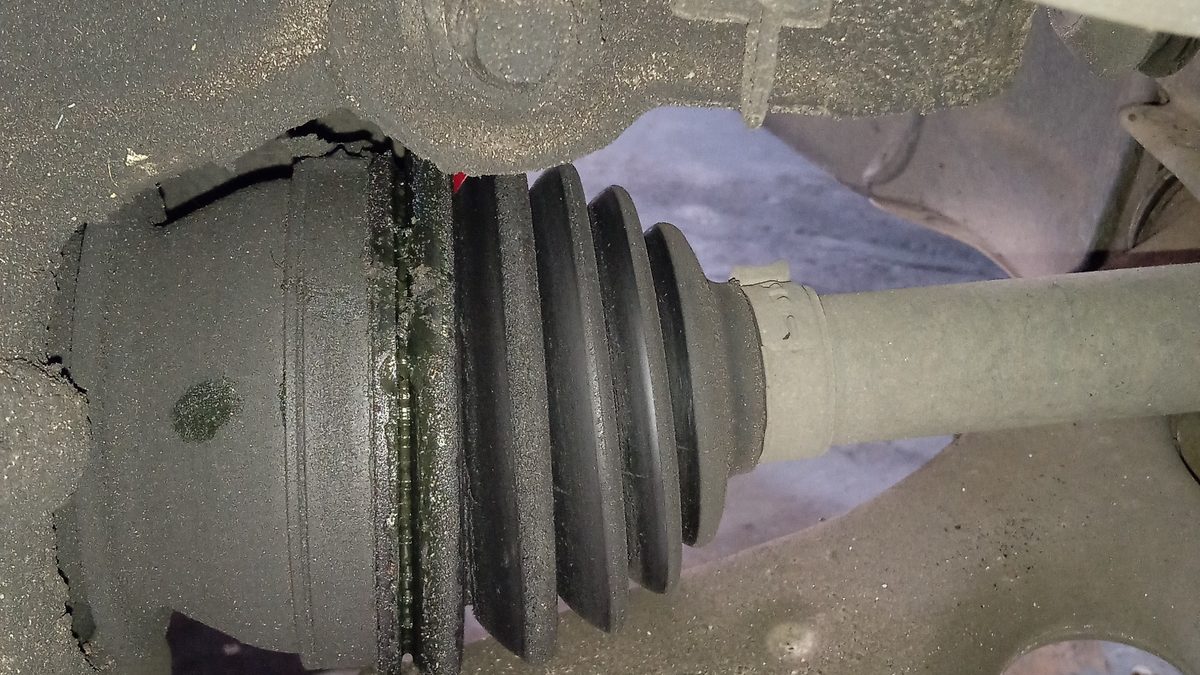
- Grease around the inside of a wheel or on the inner edge of a tyre. This is the joint’s grease escaping through a torn rubber boot.
- A humming or grinding noise from the front of the car. This can sound similar to a wheel bearing, so it’s worth having it checked properly rather than guessing.
(Note: Clicking during sharp turns usually points to a worn outer CV joint, while vibration during acceleration is often caused by the inner CV joint.)
You may only notice one of these at first. If you notice more than one at the same time, or the sound has gone from occasional to constant, the joint has likely gotten worse.
What is usually causing it
The CV (constant velocity) joint sits at each end of your car’s driveshaft and lets the wheel turn and move up and down while still transferring power from the engine. It’s protected by a rubber boot packed with grease.
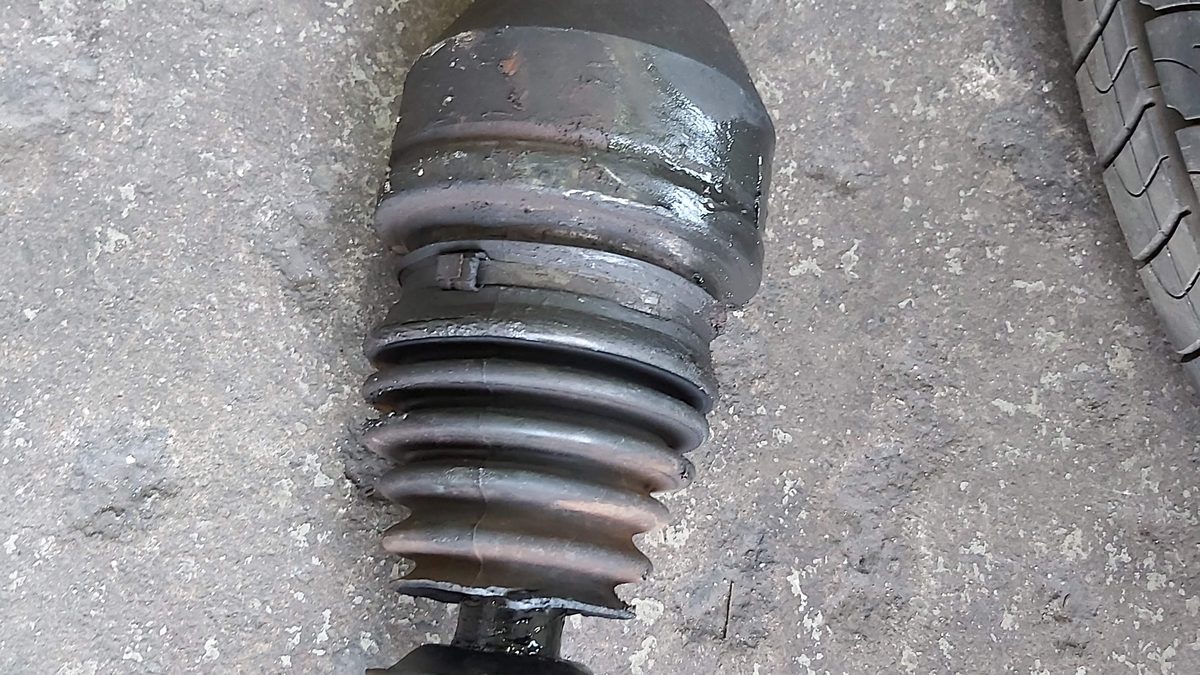
Most CV joint trouble starts with the boot, not the joint itself:
- A torn or cracked rubber boot lets grease out and lets dirt and water in. Once the joint is running dry and gritty, it wears fast.
- General wear over time and kilometres, particularly on cars that do a lot of stop-start driving or regularly carry heavy loads.
- A knock or impact, such as hitting a pothole hard or scraping a kerb, which can damage the boot or the joint directly.
A torn boot caught early is a small, cheap fix. A joint that’s been running dry for weeks or months is a bigger job, because the metal parts inside have already started to wear.
What happens if you leave it
A clicking CV joint won’t fix itself, and it won’t stay the same. Left alone, a torn boot means the joint keeps losing grease and taking in grit every time you drive, so the wear speeds up rather than levelling off. What starts as an occasional click on full lock becomes a constant clunk, then a vibration you can feel at normal speed.
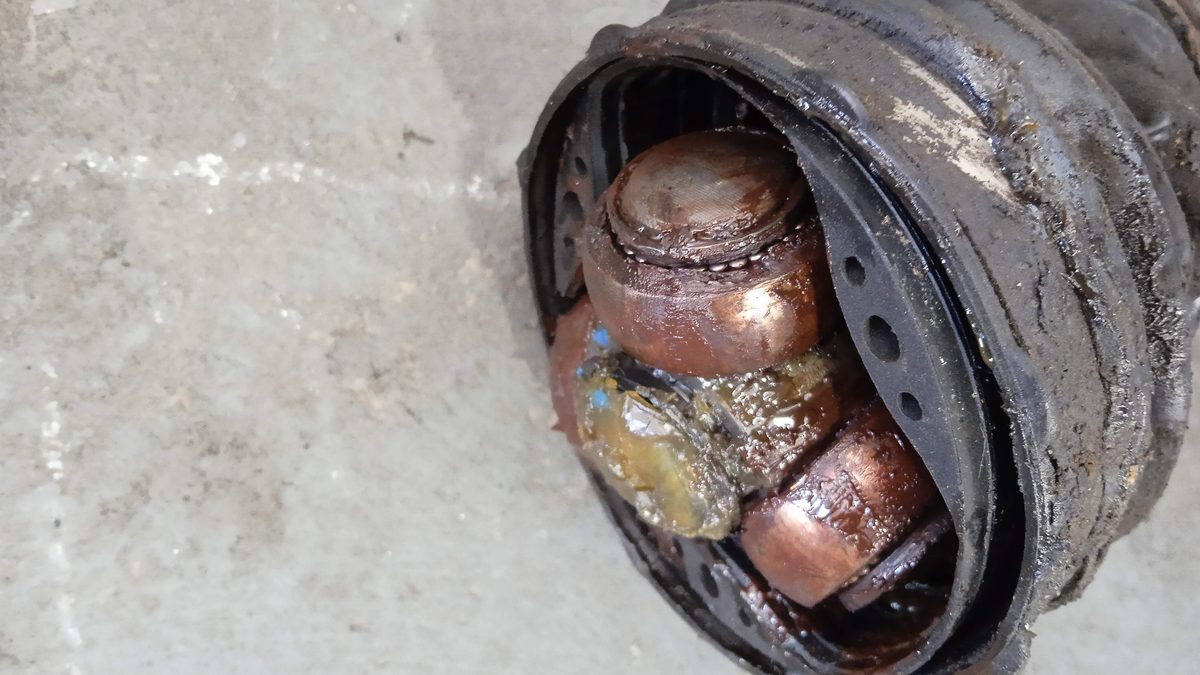
If the joint fails completely while you’re driving, you can lose drive to that wheel, or in a worse case, the joint can seize or separate, which affects your steering and control. That’s rare, but it’s the reason this isn’t a fault to put off indefinitely.
There’s a cost angle too. A boot and grease replaced early is a small repair. Wait until the joint itself is worn, and you’re paying for the full joint or driveshaft, plus the labour to fit it. Catching it early is cheaper in rands and safer on the road.
What to do now
- You don’t need to pull over immediately if the fault is just an occasional click when parking. But don’t ignore it.
- Avoid full-lock turns and hard acceleration where you can, until it’s checked.
- If the vibration becomes strong, or you hear a loud clunk with steering that feels loose or different, stop driving and have the car looked at before you continue.
- Book a CV joint and driveshaft check rather than trying to diagnose it yourself. A clicking noise when turning can also come from a worn wheel bearing or a strut mount, and the two are easy to mix up. If you want to understand the difference, see our wheel bearing guide.
Not sure what you’re hearing? Book a CV joint check or get in touch with your nearest branch through our contact page.
What we do at Fangio
When you bring the car in, we start with a physical inspection of both CV joints and the boots on the affected side, checking for tears, grease loss, and play in the joint itself. We also check the wheel bearings at the same time, since the symptoms can look similar and it’s worth ruling that out while the wheel is off.
If it’s just the boot, we clean out the joint, repack it with the correct grease, and fit a new boot. If the joint itself is worn, we’ll tell you honestly rather than replace parts that don’t need it, and talk you through the driveshaft or joint replacement before we do any work. We’ll also give you a realistic idea of how long the car will be with us before we start.
For a detailed look at what a full CV joint replacement costs and how we decide between a boot repair and a full replacement, see our CV joint repair guide.
Fangio Auto Service has two branches, Fangio Auto Randburg and Fangio Auto Hermanus, so you can book whichever is closer to you.
Questions people ask
Is it safe to drive with a bad CV joint?
For a short while, if the symptom is just an occasional click on full lock, most people keep driving carefully. But it gets worse with time and use, and in rare cases a joint can fail completely. Have it checked rather than waiting to find out.
How long can you drive on a worn CV joint?
There’s no fixed answer. It depends on how far gone the joint is and how you drive. A joint that’s just lost its boot might last weeks with careful driving. One that’s already grinding or clunking loudly could fail much sooner. Get it looked at rather than guessing.
What does a CV joint grease leak look like?
Grease flung onto the inside of the wheel rim or the inner sidewall of the tyre, sometimes as far as the wheel arch. It’s usually dark and sticky, and it’s a sign the rubber boot has torn.
Is a CV joint noise the same as a wheel bearing noise?
Not always, and they’re easy to confuse. A CV joint tends to click on turns and clunk on acceleration. A wheel bearing tends to hum or growl, and the noise usually changes with your speed rather than with steering. Our wheel bearing guide goes through this in more detail.
Can I just replace the boot instead of the whole joint?
Yes, if the joint itself hasn’t started wearing yet. That’s why catching a torn boot early matters. Once the joint has been running without grease for a while, a boot on its own won’t fix the underlying wear.
Will a broken CV joint stop the car from driving?
It can. If the joint separates completely, that wheel can lose drive, or in a bad case affect your steering. This is uncommon, but it’s the reason a persistent clunk or vibration is worth acting on rather than living with.
What are the symptoms of a bad CV joint?
The main signs are a clicking or popping noise when turning, especially at full lock, a clunk when you accelerate or change direction, vibration through the floor or steering wheel that gets worse with speed, and grease around the inside of a wheel from a torn boot. Seeing more than one of these together, or a sound that has gone from occasional to constant, means the joint has likely gotten worse.
Book a check
If you’ve noticed a click when turning, a clunk on acceleration, or a vibration that’s getting worse, get it looked at before it becomes a bigger repair. Book a CV joint and driveshaft check, or find your nearest branch, phone number, WhatsApp and opening hours on our contact page. Fangio Auto Randburg and Fangio Auto Hermanus are both listed on our branches page.
Already have a quote?
Get an honest second opinion
Send it over and we’ll review it, explain it plainly, and beat it where we can.