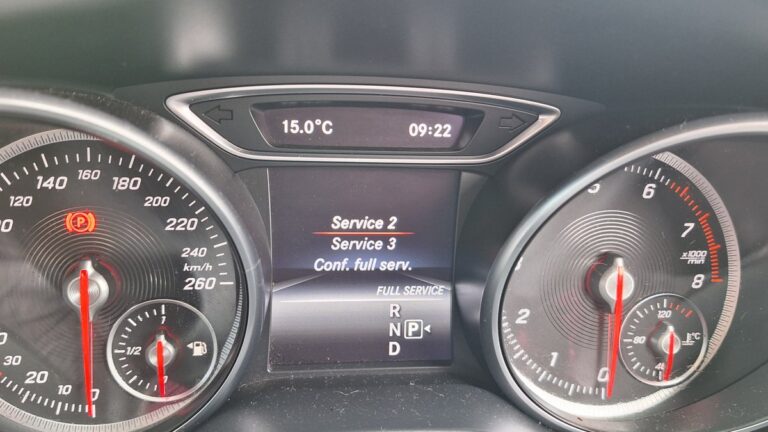
Your car idles like it can’t make up its mind, the pedal feels lazy when you pull off at a robot, and you’re filling up more often than you used to. Any one of those can have a few causes. But together they often point to the same small part: a throttle body that’s caked in carbon. Here’s what dirty throttle body symptoms look like, why it happens, and what we do about it at our Randburg and Hermanus workshops.
What the throttle body does
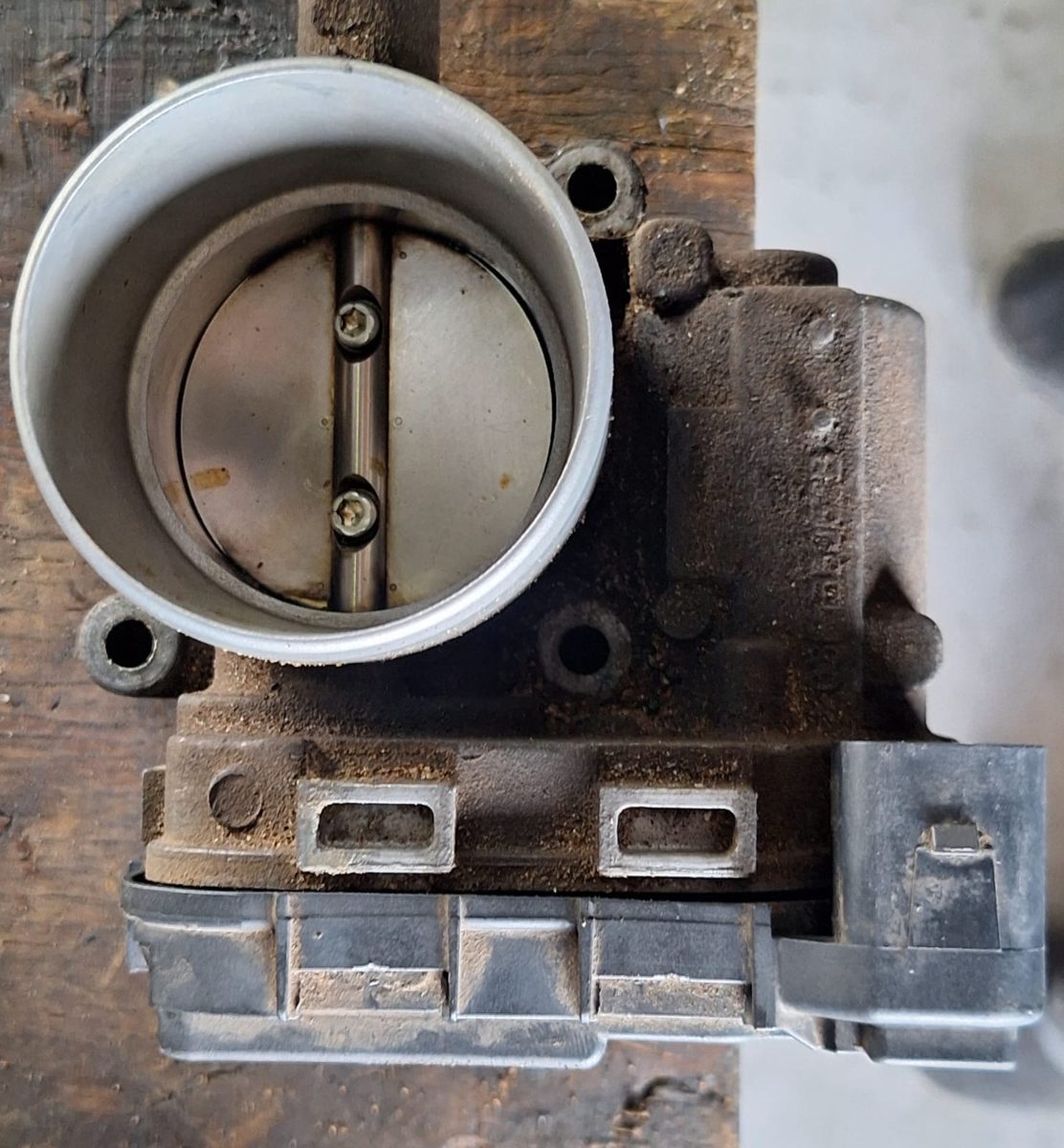
The throttle body sits between the air filter and the intake manifold. Inside it is a round plate (the butterfly) that opens when you press the accelerator and closes when you lift off. It controls how much air the engine breathes, and the engine computer matches fuel to that air.
Over time, oily vapour from the crankcase breather and fine dust that gets past the air filter settle around the edge of that plate. They bake into a black crust. The gap the engine relies on at idle gets smaller and the airflow stops being smooth. That’s when you start to feel it.
6 dirty throttle body symptoms to watch for
1. Slow throttle response
You press the pedal and there’s a pause before the car responds. On modern drive-by-wire cars the computer is trying to correct for the restricted airflow, and that correction takes a moment. It’s most noticeable when pulling away from standstill.
2. Irregular or hunting idle
The rev counter rises and falls on its own while you’re stopped, or the idle sits lower than normal and the car shudders. Some cars even stall when you come to a stop or switch the air con on. At idle the plate is almost closed, so a thin layer of carbon makes a big difference.
3. Less power, especially uphill
The engine feels flat climbing a hill or with a full load in the boot. If the air isn’t flowing cleanly the engine can’t make its full power, and you end up pressing harder for the same result.
4. Jerky or uneven acceleration
Instead of a smooth build-up, the car surges, hesitates, then lunges forward. Sticky carbon can make the plate open unevenly, and the fuel mix jumps around with it.
5. Higher fuel consumption
When the computer keeps adjusting for poor airflow, fuel use creeps up. You might only notice it as an extra trip to the pump every few weeks, but it adds up over a year.
6. A clogged air intake
A dirty throttle body often goes hand in hand with a neglected air filter. If the filter is blocked, the engine is already short of air and more dirt gets pulled through to the throttle body. Checking the filter is the first step, and it’s one of the cheapest fixes on a car.
Other things that feel the same
Here’s the honest part. Rough idle and hesitation aren’t only throttle body problems. A dirty mass airflow (MAF) sensor, a split vacuum hose, worn spark plugs, a weak ignition coil or blocked injectors can all give you the same feeling from the driver’s seat. A faulty emissions control system, like a sticking EGR valve, can also add soot to the intake and make things worse.
That’s why we don’t just spray cleaner and hope. We plug in a diagnostic tool, read any stored fault codes and look at live data like throttle position and idle trims. Then we look at the throttle body itself. If it’s dirty, you’ll see it straight away.
How we clean a throttle body
We remove the intake pipe, inspect the plate and bore, and clean the carbon off with a proper throttle body cleaner that’s safe for the coating and the sensor. On electronic throttle bodies we’re careful not to force the plate open by hand, because that can damage the motor inside. Afterwards many cars need an idle relearn (also called a throttle adaptation) with a diagnostic tool, otherwise the idle can be worse than before. We also check the air filter and the breather hoses so the problem doesn’t come straight back.
If the throttle body is worn or the motor or position sensor has failed, cleaning won’t fix it and we’ll tell you so before any parts are ordered.
Why drivers bring it to Fangio
- We diagnose first, so you only pay for the fix your car actually needs
- The proper relearn is done after every clean, not skipped
- You get a clear explanation and a quote before work starts
- Air filter and breather checked at the same time, while the intake is already open
In Johannesburg, our Randburg workshop sees plenty of cars that spend their days in stop-start traffic on Republic Road and Beyers Naudé Drive, which is exactly the kind of driving that builds carbon fastest. Down in the Overberg, our Hermanus team sees the other side: cars used for short trips around town that rarely get properly warm.
Frequently asked questions
How often should a throttle body be cleaned?
There’s no fixed interval. Many cars go 60 000 km or more before it matters, but short trips, heavy traffic and older engines that burn a little oil build carbon faster. We check it during a service and only clean it when it needs it.
Can a dirty throttle body cause the check engine light to come on?
Yes. On drive-by-wire cars the computer watches the throttle position closely. If carbon stops the plate moving the way it expects, it can log a fault code and switch on the light, sometimes with reduced power (limp mode).
Can I clean the throttle body myself?
On some older cable-operated throttles it’s a simple job. On modern electronic throttle bodies, forcing the plate open by hand can damage the motor and many cars need an idle relearn afterwards with a diagnostic tool. If you’re not sure, let a workshop do it.
Will cleaning the throttle body fix my rough idle?
If carbon is the cause, usually yes. But a vacuum leak, a dirty MAF sensor, worn spark plugs or a tired coil can feel exactly the same, which is why we test before we clean.
Book a throttle body check
If your car is idling rough, hesitating or drinking more than it should, bring it in and we’ll find out why. Send us a WhatsApp or give your nearest branch a call.
Get a Free Quote
Find Our Randburg Workshop
Find Our Hermanus Workshop
Already have a quote?
Get an honest second opinion
Send it over and we’ll review it, explain it plainly, and beat it where we can.