A whine from the front of the engine, a drip you can’t explain, or coolant that keeps dropping with no puddle in sight. These are the usual first signs of a water pump on its way out. It’s a common fault, and in most cases you can still drive to a workshop for a check. But a water pump that fails completely can mean sudden overheating, so it’s worth knowing what to look and listen for now. Here’s what these symptoms mean and what to do about them.
What you’re noticing
Water pump problems tend to show up in this order:
- A whine or squeal from the front of the engine, especially on start-up or when you rev. This is usually the pump’s bearing wearing out, and it often gets louder over days or weeks rather than appearing overnight.
- A drip under the front of the car, directly below the water pump, even when the car has been standing for a while. Water pumps have a small weep hole built in. It’s the designed drain point for a failing shaft seal, and a drip there is often the clearest sign something is wrong.
- Coolant that keeps disappearing with no puddle anywhere. This confuses a lot of drivers, but it’s common: the coolant can be burning off inside the engine, or dripping onto a hot component and evaporating before it ever reaches the ground.
- The temperature gauge creeping up, particularly at idle or in traffic, once the pump can no longer circulate coolant properly.
- A rattle or looseness if the bearing has worn badly, sometimes felt as a vibration through the engine.
Any one of these on its own is worth a check. More than one together means don’t wait.
What is usually causing it
- Bearing wear. The pump’s internal bearing runs constantly while the engine is on. Over time and kilometres it wears down, which is what produces the whine or squeal.
- A failing shaft seal. The seal that keeps coolant inside the pump wears out, and coolant escapes through the weep hole rather than building up pressure inside the pump housing.
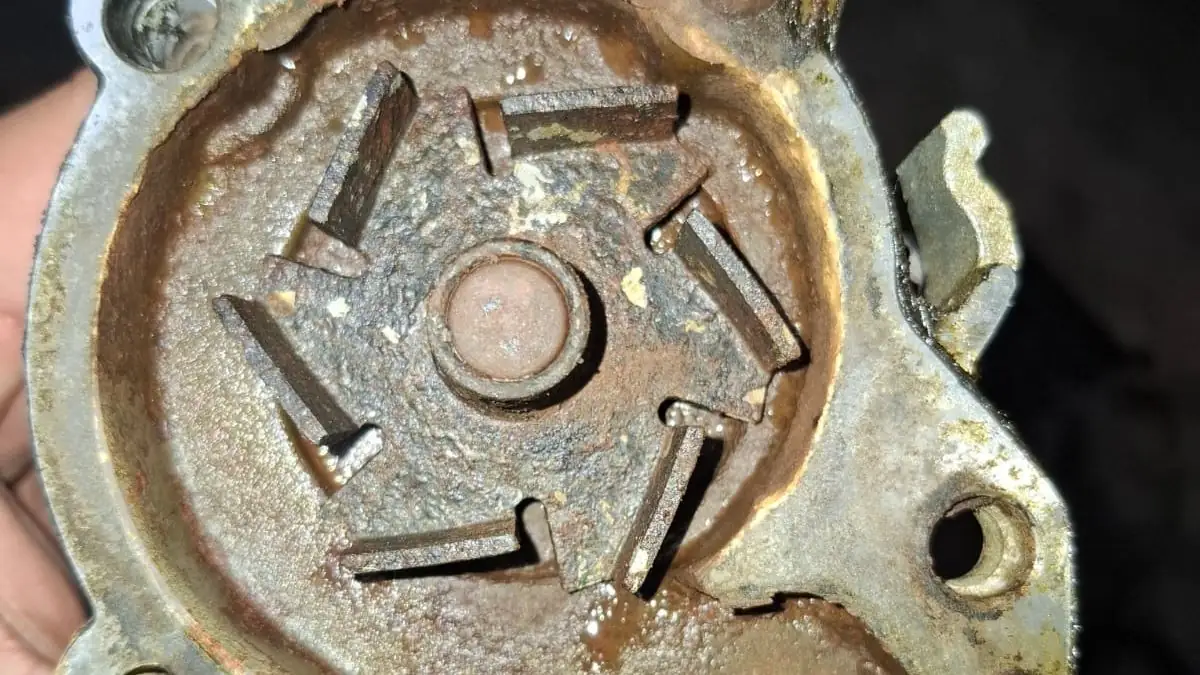
- Impeller wear or corrosion. The impeller pushes coolant around the engine. If it corrodes or the vanes wear down, the pump moves less coolant even while it’s still turning.
- Cambelt-driven wear. On many engines the water pump is driven by the timing belt (cambelt) and wears alongside it. This is why a water pump is often replaced at the same time as a cambelt, rather than waiting for it to fail on its own.
What happens if you leave it
A slow drip or a faint whine can feel like something to keep an eye on rather than act on. The risk is that water pump wear doesn’t stay slow. Once the seal or bearing goes, coolant loss can accelerate quickly, and an engine that overheats even briefly can warp a cylinder head or blow a head gasket. That turns a straightforward water pump replacement into a far bigger repair, and it can also mean being stranded rather than driving in under your own steam. Catching it at the whine-or-drip stage is a small job. Catching it after an overheat is not.
What to do now
- If the temperature gauge is climbing or you see steam, pull over safely and switch off. Don’t keep driving on an overheating engine.
- If it’s just a whine, a weep hole drip, or coolant slowly dropping and the gauge is normal, you can usually drive to a workshop, but don’t delay it.
- Don’t top up coolant and hope it settles. If the pump is failing, you’ll be back to the same level within days.
- Check your coolant level yourself if you can do so safely (engine cold), and note whether the level is dropping over a few days. That’s useful information for whoever diagnoses it.
- Book a diagnostic check rather than guessing. A whine can also be a drive belt or another bearing, so it’s worth confirming before parts are ordered.
Need this looked at? Book a diagnostic check at Fangio Auto Randburg or Fangio Auto Hermanus.
What we do at Fangio
We start with a proper diagnostic rather than assuming it’s the water pump, since a front-of-engine whine can have more than one cause. That means checking the pump, drive belt, and other front-end bearings to confirm exactly what’s worn. If it is the water pump, we check the coolant system for damage from the leak and confirm whether the pump is driven by a cambelt that’s due or overdue. If it is, we’ll talk you through replacing both together rather than paying for the labour twice. The full list of what we check and fix on the coolant system is on our services and repairs page. All labour carries our 12-month or 10 000 km warranty.
Questions people ask
Can I still drive with a bad water pump?
If the temperature gauge is normal and you just have a whine or a weep hole drip, you can usually drive to a workshop. If the gauge is climbing or you see steam, stop and don’t continue.
Why is my coolant disappearing with no leak on the ground?
It’s usually not disappearing without a trace. It’s either burning off inside the engine or dripping onto a hot part of the engine and evaporating before it reaches the ground. This is a common water pump symptom, not a sign the coolant is fine.
What is the weep hole on a water pump?
It’s a small drain hole built into the pump housing, designed to let coolant escape there rather than build up inside the pump if the shaft seal starts to fail. A drip from the weep hole is one of the clearest early signs of a failing pump.
Is a whining water pump serious?
It means the bearing is wearing, and it will keep getting worse rather than better. It’s not usually an emergency on its own, but it should be checked before the bearing fails completely.
Does the water pump need to be replaced with the cambelt?
Not always, but on many engines the pump is driven by the cambelt and shares its wear pattern. If your cambelt is due, it’s worth replacing both at the same time.
How long does a water pump replacement take?
It depends on the engine and whether the cambelt is being replaced at the same time. We’ll give you an accurate time once we’ve had a look.
Book a check
If you’ve noticed a whine from the front of the engine, a drip near the water pump, or coolant that keeps dropping, get it looked at before it turns into an overheat. Contact Fangio Auto Randburg or Fangio Auto Hermanus to book a diagnostic check.
Already have a quote?
Get an honest second opinion
Send it over and we’ll review it, explain it plainly, and beat it where we can.