Overheating, coolant that keeps disappearing and white vapour from the exhaust are the classic head gasket complaints. They are also the symptoms of several other faults. Before you accept a head gasket quote, the fault has to be proven rather than guessed.
The quick safety answer
If the temperature gauge is climbing, a warning light is on, or the car is losing coolant, stop driving it. Pull over safely and switch off.
An overheating engine does not fail politely. Sustained heat can warp the cylinder head, crack it, damage bearings or seize the engine. A car that needs a gasket today can need far more after being driven on with the gauge up. Nursing it home is not a saving.
Do not open the expansion tank or radiator cap while the engine is hot. The system is pressurised and the coolant is above boiling point.
What the head gasket actually seals
The head gasket sits between the cylinder head and the block and seals three things at once: combustion pressure in each cylinder, coolant in the coolant passages and oil in the oil galleries. When it fails, they mix in whatever combination the failure allows, which is why symptoms vary between cars. Overheating is usually part of the story, but the direction matters. A failing gasket can cause overheating, and overheating can cause a gasket to fail. Which came first has to be established, because the cause must be fixed or the new gasket goes the same way.
Symptoms, and what else causes them
No single symptom on this list proves a blown head gasket.
- White vapour from the exhaust that does not clear. Coolant burning in a cylinder gives a sweet smelling cloud that continues after warm-up. Cold morning condensation clears in a minute or two.
- Coolant dropping with no visible leak. The level keeps falling with nothing on the driveway. It is going somewhere internal, or out of a hose only when hot.
- Bubbling in the expansion tank. Combustion gas pushed into the cooling system, or trapped air from a bad bleed.
- Milky oil, or a mayonnaise-like deposit under the oil cap. Short cold trips can leave a similar deposit under the cap, so check the dipstick too.
- Overheating that returns after topping up.
- Rough running, a misfire or loss of power. Coolant in a cylinder disturbs combustion, but so does a failed coil, injector or plug.
Several of those signs have other possible causes. Overheating and coolant loss can come from a radiator leak, a failed cap, a stuck thermostat, a tired water pump, a blocked core or a dead fan, and milky oil can also point to a failed oil cooler. A cracked or warped head can mimic much of the list. That overlap is why diagnosis is cheaper than a wrong repair, and why a radiator flush and general cooling health matter.
The tests that come before anything is dismantled
No workshop should pull a head off on the strength of a symptom list. Tests narrow it down first.
Cooling system pressure test. The system is pressurised with a hand pump and watched. It can reveal external leaks that only show under pressure. If pressure is lost with no external source found, that may point to an internal leak, but it does not identify the failed component on its own.
Combustion gas test on the coolant. A test fluid held over the expansion tank changes colour if combustion gases are present. It is one of the more direct signs that combustion pressure is reaching the coolant.
Compression and leak-down test. A compression test shows whether a cylinder holds pressure. A leak-down test shows where it escapes to, and the cooling system, an adjacent cylinder and the crankcase each point somewhere different.
Visual, fluid and fault code checks. Oil and coolant condition, plugs, radiator, cap, hoses, fans, misfire counts and coolant temperature behaviour.
We work through this as part of a car diagnostic, and the results decide whether the head comes off. Testing sometimes finds a thermostat, a cap or another cooling-system fault instead of a gasket failure.
Blown gasket, cracked head or warped head
These three overlap and are often confused, including in quotes. A gasket can fail from age, a previous overheat or a poor repair. A head can crack after severe overheating and leak in much the same places, or warp so the face no longer seals, which makes a new gasket fail again.
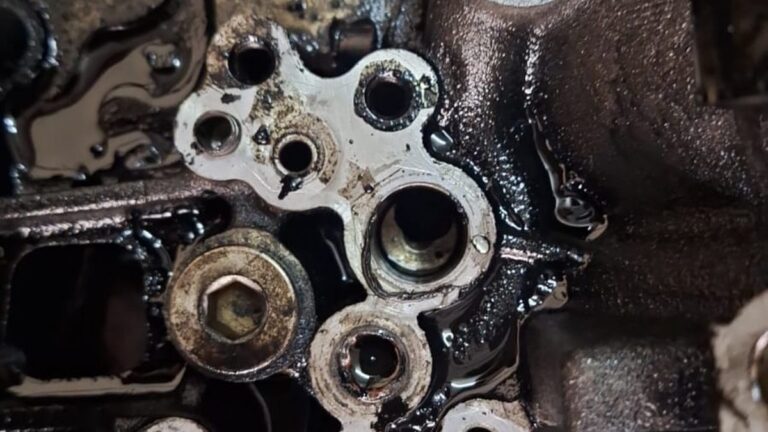
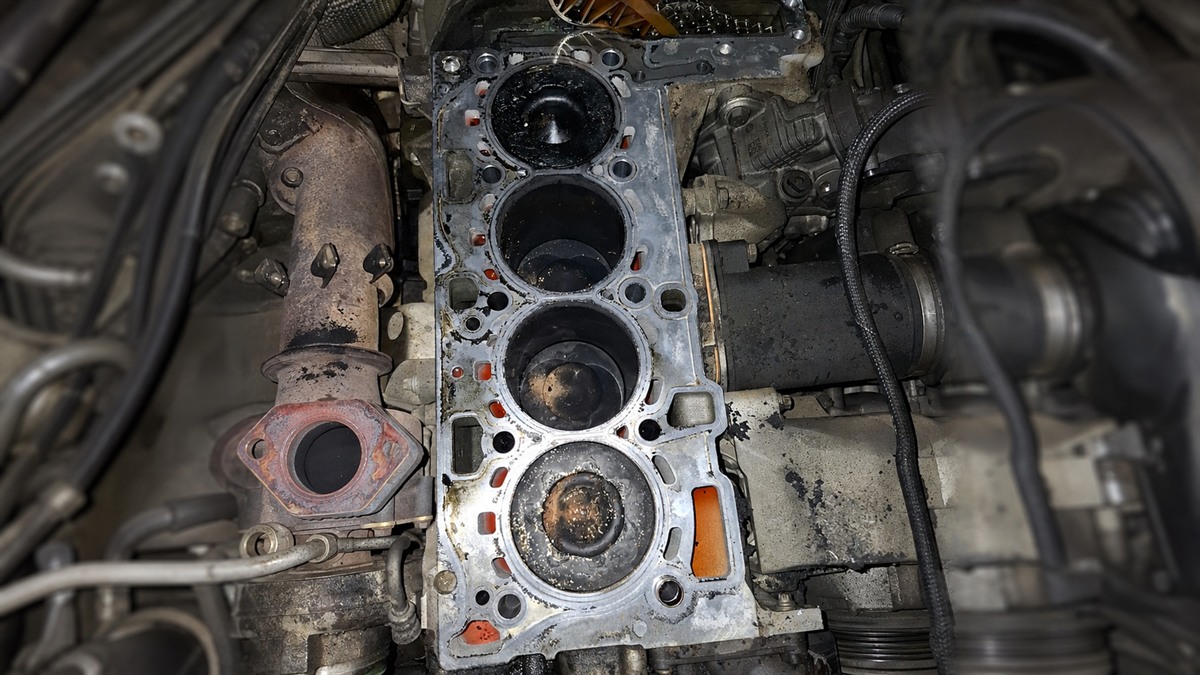
The distinction cannot be made reliably with the engine assembled. Once the head is off it is cleaned, measured for flatness and inspected, often at a machine shop. That result decides whether the job is a gasket, a head repair or a replacement head, as our Hyundai H100 cylinder head overhaul write-up shows.
What the repair involves
A head gasket job is labour heavy, and the exact procedure belongs to the engine. The cooling system is drained and the intake, exhaust, ancillaries, wiring and front timing components come off to reach the head. The timing system is locked, removed and re-timed to the manufacturer’s procedure, with belt or chain parts replaced where that procedure, age or condition calls for it. Both faces are cleaned, and the head is measured and pressure-tested as needed, then skimmed only where the measurements call for it and the result stays within service limits. Head bolts are replaced where they are torque-to-yield or otherwise specified. It goes back together with a new gasket set and fresh coolant, with thermostat, pump and hoses renewed by condition, age and access, then the system is bled because trapped air causes a fresh overheat.
The step people skip is fixing why it overheated. If the blocked radiator, tired pump, weak cap or dead fan that caused it is still fitted, the new gasket is on borrowed time.
What drives the cost
We do not publish a rand figure, because a number without the vehicle attached is worthless. These factors move the price:
- Engine layout. A four cylinder is a different job to a V6 or V8 with two heads, or a tight transverse engine.
- Labour hours for that specific engine, usually the largest part of the bill.
- What the head inspection finds. Skimming, valve work, a crack repair or a replacement head each change the total.
- Parts scope and choice. Gasket set, head bolts, timing parts, pump, thermostat, hoses and coolant, from original equipment to budget aftermarket.
- Collateral damage from the overheat, from sensors and housings to damage below the head.
- Diesel or petrol. Some diesel engines can mean more dismantling and tighter tolerances.
A quote with a firm final price before the head is off is guessing at part of it. Sealer in a bottle is not a repair either: it does not restore the clamping seal and it can block fine radiator and heater passages, which makes the proper repair worse.
When repair is worth it
The decision is about the car, not the gasket. Repair usually makes sense when the vehicle is otherwise sound, the mileage is reasonable for its age and the cost is sensible against what the car is worth. Think harder when the engine has been overheated severely or repeatedly, when the block is suspect, or when the repair approaches the value of the car. On some vehicles a reconditioned engine is the better route, and we will say so.
Book a diagnosis at Fangio Auto Randburg
We have been diagnosing and repairing engines in Randburg since 2009. If your car is overheating, losing coolant or blowing white vapour, book a diagnosis before it becomes a bigger job, and arrange safe transport rather than driving it in. Have ready: make, model, year, engine size, fuel type, mileage, how long the symptoms have been there and whether it has already overheated.
- Call us: 011 326 3133
- WhatsApp us: 082 402 3517
- Visit us: 110 Susman Ave, Blairgowrie, Randburg, Johannesburg
- Hours: Monday to Friday, 07:30 to 16:30. Closed Saturday and Sunday.
See everything we handle on our services and repairs page, find directions on the Randburg branch page, or send the details through our contact page.
FAQ
How do I know if my head gasket is blown?
Not from symptoms alone. Persistent white exhaust vapour, unexplained coolant loss, bubbling in the expansion tank, milky oil and repeated overheating raise the suspicion, but a radiator, thermostat, cap, pump or cracked head can produce a similar picture. A pressure test, a combustion gas test on the coolant and a compression or leak-down test narrow it down. Separating a failed gasket from a cracked or warped head may still need the head removed and inspected.
Can I drive with a blown head gasket?
No. Driving an engine that is overheating or losing coolant can warp or crack the cylinder head and destroy the engine. Stop, let it cool and arrange transport to a workshop.
Does white smoke always mean a blown head gasket?
No. Thin vapour on a cold start that clears as the engine warms up is normally condensation. Thick, sweet smelling smoke after warm-up points at coolant burning in a cylinder, and still needs testing.
Can a head gasket be fixed with a sealer instead of replaced?
Sealers are at best a short-term measure on a limited type of leak. They do not restore the seal between head and block, and can block radiator and heater passages. We do not treat them as a repair.
Already have a quote?
Get an honest second opinion
Send it over and we’ll review it, explain it plainly, and beat it where we can.