Most owners who find oil on a spark plug want one answer straight away: is the car safe to drive? It depends on where the oil is and how badly the engine is running. Oil in the plug well is a different problem to oil burnt onto the firing tip inside the combustion chamber, and the two do not carry the same risk or the same repair.
The quick safety answer
If the engine runs normally and the oil was only found during a routine inspection, you generally have time to book a diagnosis rather than stop where you are.
If the car is misfiring, shaking, losing power, hard to start or smoking, or a warning light has come on, check the stop-driving list further down first. If anything on it applies, have the car brought in.
First work out where the oil actually is
The plug needs to be read properly before anyone talks about causes. There are two very different findings, and most online advice blurs them together.
Oil in the spark plug well. The plug sits down a tube or recess in the cylinder head, so oil pooling there is outside the combustion chamber. It soaks the plug body, boot and coil, and usually points at upper engine sealing.
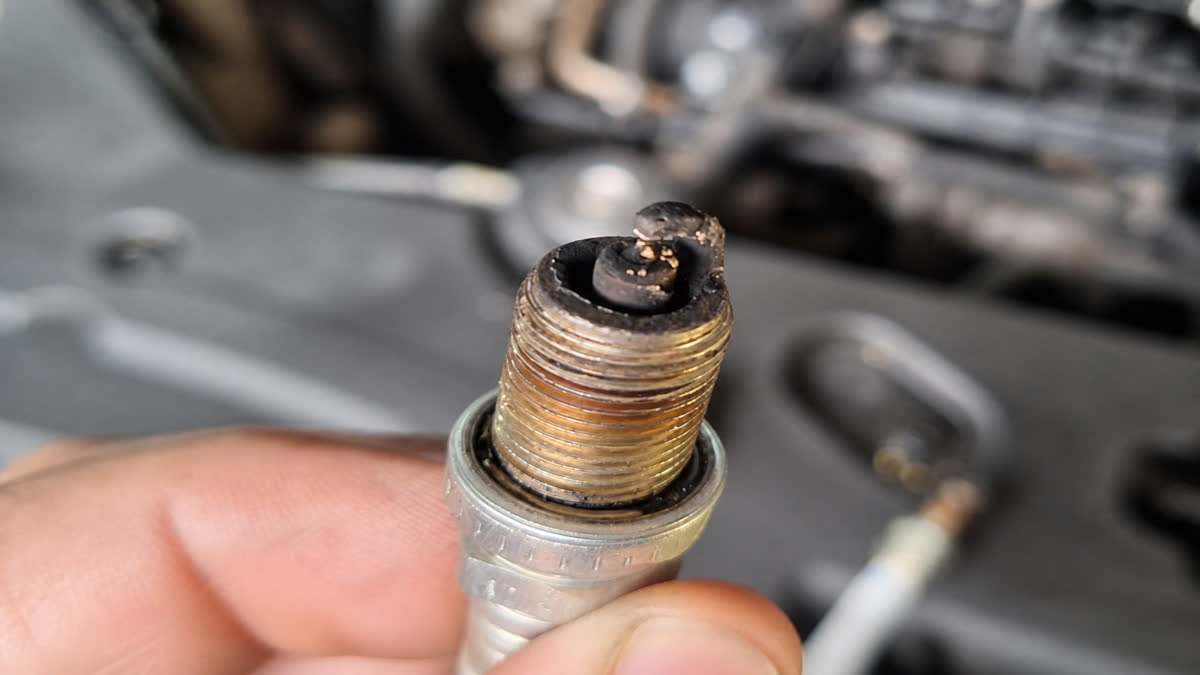
Oil on the firing tip. This is oil that has reached the combustion chamber and fouled the electrode end of the plug. NGK treats wet, oily deposits at the firing end as a sign of poor oil control, and Champion classes oil fouling as lubricating oil reaching the firing end, commonly from oil entering the combustion chamber or a crankcase breather fault.
A car can have both at once, so the plug should be removed and read, not guessed at.
If a plug is being pulled, do it safely. Let the engine cool first, because removing plugs from a hot engine risks burns and, on some engines, thread damage in the head. Clear any oil out of the well before the plug comes out, otherwise oil and grit drop into the cylinder. If you cannot do that cleanly, let the workshop read it.
Symptoms worth paying attention to
None of these prove the cause on their own, but they change what we check.
A misfire or rough idle. Oil on the firing tip stops the plug sparking cleanly, and oil in the well can track the spark to earth before it reaches the plug. Either way that cylinder stops pulling its weight.
Hard starting when cold. A fouled plug struggles most when the engine is cold and the mixture is rich.
Loss of power or hesitation. A cylinder that is not firing reliably shows up when you ask the engine for effort.
The engine warning light. Misfire codes are common here. On most cars a flashing light means a misfire is happening right now, and a steady light means get the codes read soon, but neither is automatically safe. Your owner’s manual is the final word for your model.
Blue or blue grey smoke from the exhaust. This points to oil burning in the combustion chamber rather than a sealing leak outside.
Oil consumption between services. If you are topping up more often than you used to, tell us.
A burning oil smell or oil around the top of the engine. Oil escaping a cover or seal often drips onto the exhaust manifold or turbo housing. Oil landing on hot exhaust parts needs prompt attention.
Common causes, split by where the oil is
Oil in the plug well normally comes from upper engine sealing: a leaking valve cover gasket, worn plug tube seals or grommets, a damaged plug tube, or a cover that has been distorted or refitted badly. They hold back the oil splashing around the valvetrain, so a failure opens a route into the well.
Oil on the firing tip means oil has reached the combustion chamber. Causes include worn piston rings or bores, worn valve stem seals or guides, and crankcase ventilation faults that let the engine pull oil mist into the intake. Both NGK and Champion link oily firing end deposits to this group of problems rather than to the plug itself.
None of these can be judged from the driver’s seat. Worn valve stem seals and worn rings produce very similar complaints, so telling them apart takes workshop testing.
Why fitting new plugs does not fix it
New plugs are often the first thing tried, and the car usually feels better for a while. That is not a repair, just a clean surface on a plug that is about to get dirty again.
Champion’s trouble tracing guidance is explicit that with oil fouling the cause has to be repaired, not just the plug. If the gasket is still leaking, or the rings or valve stem seals are passing oil, the new plug fouls again on the same timetable. Repeat fouling on one cylinder is a useful clue, so keep your old plugs and tell us if it has happened before.
The order a proper diagnosis follows
A sensible workshop works from cheapest and most likely to the most invasive.
- Scan and record fault codes, including which cylinders are misfiring and whether it happens at idle, under load or across the board.
- Remove and read the plugs, noting which cylinders are affected and whether the oil is in the well, on the tip, or both.
- Inspect, clean and test the ignition parts. Coils, boots and leads that have sat in oil are cleaned and tested first. Oil attacks rubber and insulation, so some will be perished or failing electrically and do need replacing. We do not replace ignition parts just for being oily.
- Inspect the sealing. Valve cover gasket, plug tube seals and the cover itself, checking whether the leak explains what is in the well.
- Check the crankcase ventilation system. A blocked or failed breather can raise crankcase pressure and push oil where it should not go.
- Compression or leak down testing where the evidence justifies it. These tests do not name the fault on their own. They show where cylinder pressure is going, read alongside the plug readings, smoke, oil consumption and ventilation checks to separate valve stem seals, valve sealing and ring or bore wear.
See how we approach this on our car diagnostics page.
When you should not drive the car
Stop driving and have the car brought in if any of these apply.
- The engine warning light is flashing
- The engine is shaking badly, running on fewer cylinders or has lost a lot of power
- There is heavy blue smoke from the exhaust
- The oil pressure or oil level warning has come on
- There is a strong burning oil smell, or oil is visibly running onto hot parts of the engine
- The oil level is at or below minimum on the dipstick
Do not drive the car to us just to get it diagnosed. Arrange for it to be brought in. Driving on through a heavy misfire can wreck the catalytic converter, and driving with low oil pressure can cause severe engine damage.
What decides the repair cost
We do not publish a fixed price, because the same symptom covers repairs that are worlds apart in scope. What moves the number is how much has to come off to reach the leak, whether the fault is upper engine sealing or internal oil control, how many coils, boots or leads the oil damaged, and whether ventilation parts are faulty too.
Diagnosis comes first, then a written quote against what was found. Ask for the fault codes, plug readings and test results in writing.
Book a diagnosis at Fangio Auto
Fangio Auto Service has been repairing engine faults since 2009, and oily plugs are routine work at both workshops.
When you contact us, send the make, model, year and engine size, how the car is running, whether the engine light is on or flashing, whether there is smoke and what colour, and where the oil was seen.
Choose the workshop nearest to you:
You can also send an enquiry through our contact page or browse our full services and repairs page.
FAQ
Can I drive with oil on a spark plug?
If the engine runs normally and the oil was only found during an inspection, you usually have time to book a diagnosis. If anything on the stop-driving list above applies, have the car brought in.
Is oil in the plug well as serious as oil on the firing tip?
Different problems. Oil in the well normally points to upper engine sealing and is usually the less invasive repair. Oil on the firing tip means oil is reaching the combustion chamber, which is a bigger question about the engine’s oil control.
Will new spark plugs solve the problem?
They may improve the running briefly, but the cause has to be repaired or the new plugs foul again.
Can oily plugs damage the catalytic converter?
Driving on with a live misfire is what puts the converter at risk, because unburnt fuel passes into the exhaust. That is why a flashing light is treated as a stop signal on most cars.
Does oil on the plugs mean the engine is worn out?
No. Many cases are sealing faults outside the engine, such as a valve cover gasket or plug tube seal, which have nothing to do with internal wear. Testing tells the two apart.
Already have a quote?
Get an honest second opinion
Send it over and we’ll review it, explain it plainly, and beat it where we can.