The cambelt is one of the most important parts in your engine, and most drivers never think about it until something goes wrong. If it snaps while you’re driving, you’re looking at serious engine damage and a big engine repair.
Here’s what every car owner in Randburg and Johannesburg should know about when to change the cambelt, what to watch for, and why staying ahead of the schedule could save you from an expensive disaster.
What Is a Cambelt?
The cambelt, also called a timing belt, keeps your engine’s crankshaft and camshaft spinning in precise sync. It controls the opening and closing of the valves in sequence with the movement of the pistons. Without it doing its job correctly, the engine cannot run.
Most petrol and diesel engines use either a cambelt or a timing chain. Cambelts are quieter and lighter than chains, but they’re made of reinforced rubber and they do wear out over time. Timing chains are metal and generally last longer, though they still need regular checks and are not completely maintenance-free.
When to Change the Cambelt: Mileage and Time Intervals
Most manufacturers recommend changing the cambelt between 60,000 km and 120,000 km, or every 6 years, whichever comes first.
That “whichever comes first” rule is the part many drivers miss. A cambelt that has only covered 35,000 km but is 8 years old is still a real risk. Rubber degrades from heat, dust, and age, even when a car sits mostly in a garage. South Africa’s warm climate and dusty conditions can speed that process up.
A reliable approach is to check your car’s logbook or owner’s manual for the manufacturer’s exact interval, follow both the kilometre and the year recommendation, and not assume the car is fine simply because it’s running well.
For reference, Ford South Africa recommends checking cambelt replacement schedules specific to each model. VW and Audi also have South African-specific intervals for some engines due to local dust levels, so it’s worth confirming the right specification for your vehicle.
If you drive a Ford and you are looking for a trusted Ford service centre near you, Fangio Auto can check the correct cambelt schedule before you approve the job.
5 Warning Signs Your Cambelt Needs Attention
Cambelts often fail without any advance warning, which is exactly why following the scheduled interval is your best protection. That said, there are a few signs that should prompt an immediate inspection:
1. A ticking or slapping noise from the engine
A worn cambelt can produce a rhythmic ticking or slapping sound, particularly at cold startup. Don’t leave this one to investigate later.
2. Rough idling or engine misfires
If the belt has a damaged tooth or is starting to stretch, engine timing can slip just enough to cause uneven idling, misfiring, or a drop in power.
3. Difficulty starting the car
A worn belt can affect ignition timing and make cold starts sluggish or unreliable, especially in the mornings.
4. Oil or grime near the cambelt cover
A cam seal leak can let oil saturate the belt and speed up wear. Oily residue around the timing cover warrants a proper inspection.
5. No cambelt record in the service book
If you’ve bought a used car and there’s no documented cambelt change, treat that as a red flag. Have a workshop check the belt’s condition before you put on more kilometres.
Real workshop example: Mitsubishi Pajero rattle
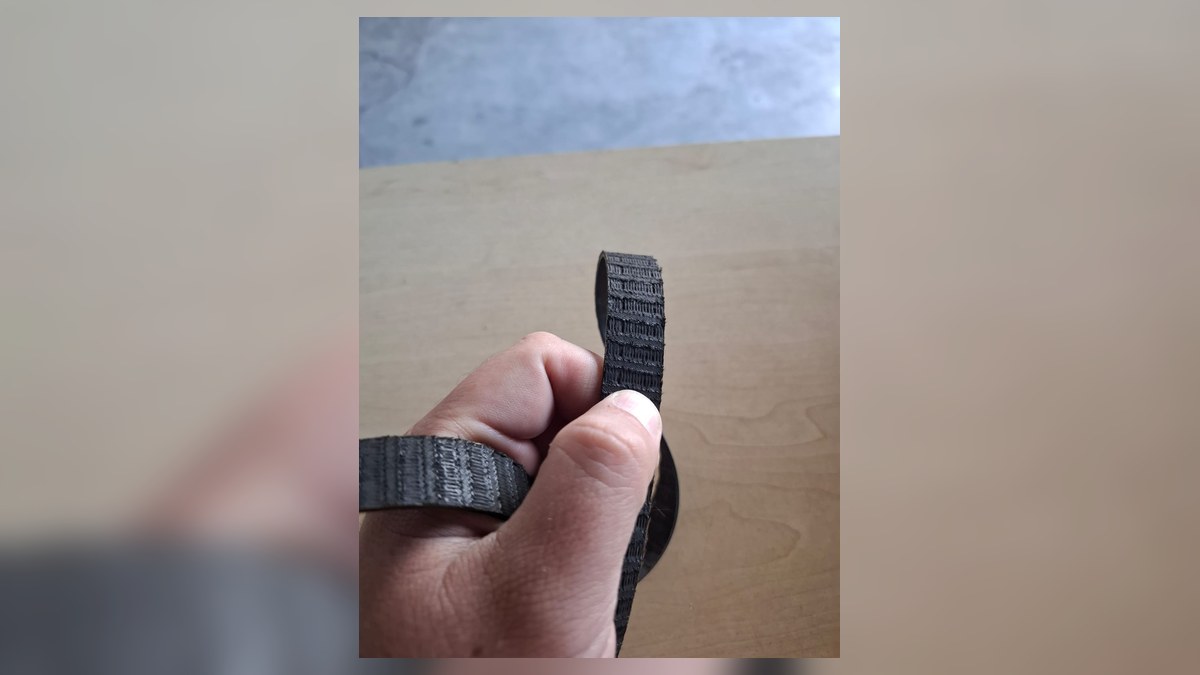
A recent Mitsubishi Pajero came in with a bad rattling noise. The fault was not the main cambelt itself, but the balance shaft belt in the same timing belt area.
On engines that use a balance shaft belt, that smaller belt can fray, shed teeth, or break. If pieces get into the cambelt path, or if the belt failure disturbs the timing components, it can take out the cambelt system and cause serious engine damage. That is why a rattle near the timing cover should be checked quickly, especially on vehicles with a cambelt service history you cannot confirm.
What Happens If the Cambelt Breaks?
On an interference engine, which is what most modern cars use, a snapped cambelt causes the pistons and valves to collide. This can bend valves, damage pistons, and crack the cylinder head. In the worst cases, the engine is beyond economical repair.
A snapped cambelt can mean a big engine repair. Replace it on time. As Arrive Alive notes, keeping on top of routine vehicle maintenance is one of the most reliable ways to avoid costly and unexpected breakdowns.
A scheduled cambelt replacement is a fraction of what a failed belt will cost you.
How to Make a Cambelt Last
You can’t service a cambelt back to health. It’s a wear part, so what you control is the conditions around it and how early you act. A few habits make a real difference:
- Follow the interval in your service book, whichever comes first, the distance or the age. A belt on a car that only does a few thousand kilometres a year still perishes with time.
- Fix oil and coolant leaks near the engine’s timing cover. Oil softens the rubber and a leaking water pump can seize or load the belt.
- Change the tensioner, idler pulleys and, where the belt drives it, the water pump in the same visit. Fitting a new belt over old pulleys is how a fresh belt ends up failing early.
- Don’t ignore a ticking, rattling or whining noise from that side of the engine, or a rough idle after a cold start. Have it looked at the same week.
Can You Change a Cambelt Yourself?
Technically yes, but it’s a job we usually advise against for home mechanics. The belt has to be fitted with the camshaft and crankshaft locked at exact positions, and on many engines that means special locking tools and the correct tensioner procedure. Get the timing one tooth out and the engine may run badly, or on an interference engine the valves can meet the pistons the first time it turns over.
The safer route is to have a workshop do it, using a complete kit and the manufacturer’s timing marks. If you’re weighing it up, ask what the quote includes: belt, tensioner, pulleys and water pump where relevant. It’s a job we do at both our Randburg and Hermanus workshops, and we’ll tell you plainly whether your car is due.
What Does a Cambelt Change Cost in Randburg?
For most South African vehicles, the cost depends on the vehicle. Ask us for a quote for your car, and make sure it covers a full cambelt kit including the tensioner and idler pulleys. If your water pump is driven by the cambelt, it’s generally worth replacing it at the same time. This adds to the upfront cost but saves you from paying for the same labour twice when the pump eventually needs attention.
Exact pricing depends on your vehicle’s make, model, and engine size. Always ask for a quote that covers the full kit, not just the belt on its own.
Book a Cambelt Check at Fangio Auto Service, Randburg
If you’re not sure when your cambelt was last changed, or you’re getting close to the service interval, it’s worth booking an inspection before it becomes an urgent problem.
At Fangio Auto Service in Randburg, we offer cambelt replacements and inspections at fair, transparent prices. We work on a wide range of makes and models, and we’ll give you an honest assessment before any work begins.
You’ll find us at 110 Susman Ave, Blairgowrie, Randburg, open Monday to Friday from 07:30 to 16:30.
Call us on 011 326 3133, send a WhatsApp to 082 402 3517, or book via our contact page. For our full range of services and more about our Randburg branch, visit our Randburg branch page.
Already have a quote?
Get an honest second opinion
Send it over and we’ll review it, explain it plainly, and beat it where we can.