The quick answer
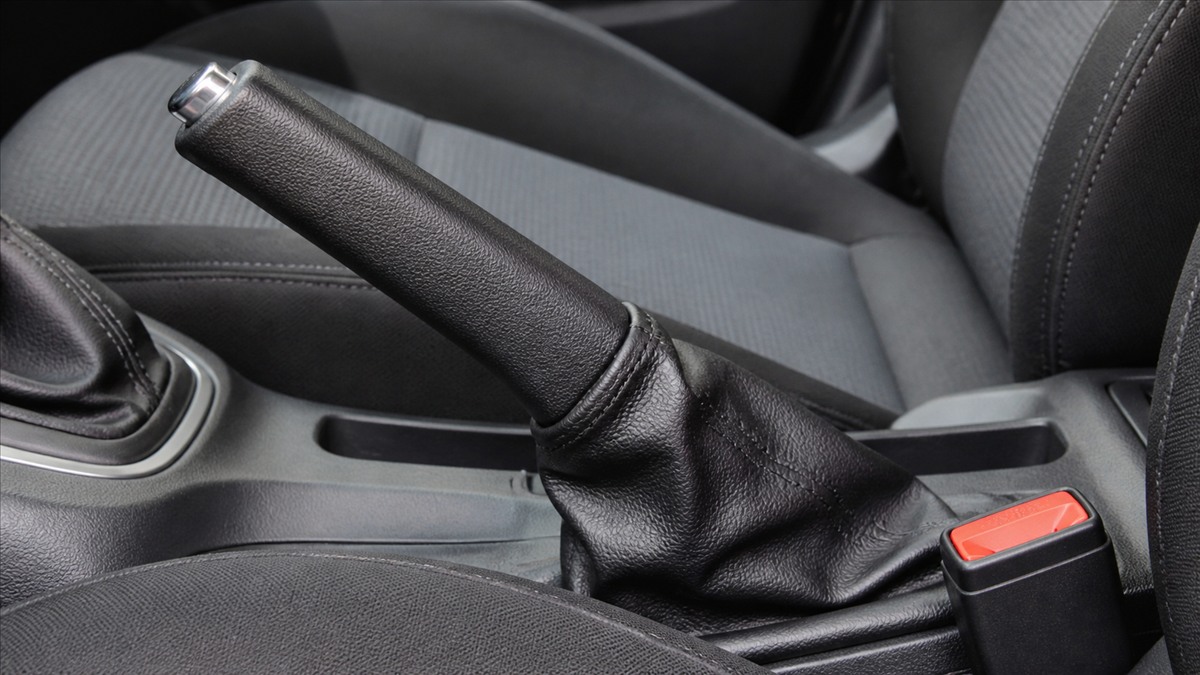
If the handbrake lever now comes up much higher than it used to, or the car creeps on a slope, tightening the cable is not automatically the right fix. Adjustment only makes sense once someone has found out why the slack appeared.
A weak parking brake can come from adjustment, from a cable that is damaged, corroded or seized, from worn friction parts, or from a fault in the rear-brake mechanism. Those are four different repairs. Only one is solved by turning an adjuster.
| What you notice | What it points at first |
|---|---|
| The lever travels higher than it used to but still holds | Slack that has built up, or wear not being taken up. |
| The lever comes right to the top with little resistance | Cable damage or corrosion, or a linkage that has let go. |
| The car creeps, and one wheel seems to do all the work | Uneven wear, one seized cable, or one side’s mechanism. |
| The brake drags, or the car feels held after you release it | A seized cable or a sticking mechanism. |
| The lever feels normal but the car still rolls | Worn friction material, or a rear-brake mechanism fault. |
Treat that as a pointer, not a diagnosis. Only a full inspection tells you which of the four it is.
How the parking brake works on your car
Parking-brake design is not the same on every car, and that is the first thing to establish. Your vehicle handbook and the design fitted to your car control what can be checked and adjusted, so the inspection starts there rather than at an adjuster.
Where the parking brake is mechanical, the lever pulls a steel cable, which pulls a lever at each rear wheel, which presses friction material against a drum or a disc and holds the car by friction alone. So the failures are mechanical. Cables wear, corrode or seize inside their sleeves. Linkages wear. Friction material wears down like any other brake material.
The layout varies. Some rear drum cars work the shoes directly. Some rear disc cars have a small drum brake inside the rear disc. Others use a mechanism in the rear caliper that winds the pad onto the disc. Electronic parking brakes have no lever. Some use motors at the rear calipers, others an electronic cable-puller or another vehicle-specific actuator layout. Where a self-adjuster is fitted, it takes up normal wear on its own, and when it seizes, slack keeps building and the lever keeps climbing. Tightening the cable hides that for a while. It does not fix it.
There is no single “just adjust it” answer.
The symptoms that get missed
Two symptoms get ignored. One is a grinding or scraping noise from the rear when the lever comes on. The other is a brake that never fully releases, so a rear wheel runs hot and you smell burning after a drive. Both point at the mechanism, not at simple slack.
The brake warning light also gets guessed at. It can mean the switch has not seen the lever come down, but it can also mean low fluid or a fault elsewhere in the braking system. If a light is part of your problem, our guide on ABS and brake warning light diagnosis explains why it needs reading rather than guessing.
Adjustment, cable, or rear-brake repair
Three repairs sit behind the same symptom. Inspection decides which one you actually need.
| Repair | When it is the right one |
|---|---|
| Adjustment | The cable is sound and moves freely, the rear friction material and the drum or disc surfaces are in good condition, the mechanism works properly, and the only problem is slack. |
| Cable work | Inspection finds frayed strands, corrosion, a split outer sleeve, a cable that has seized so it no longer moves freely in both directions, or a cable past what the adjuster can take up. |
| Rear-brake repair | The friction material is worn down, the drum or disc surface is scored, oil or grease has reached the friction surfaces from a leaking seal, shoe hardware or springs have failed, or a self-adjuster or caliper parking mechanism has seized. |
A seized cable is one reason a handbrake stays partly on after release, and tightening a damaged cable does not restore the movement it has lost.
The dangerous middle ground is tightening the cable to cover worn rear brakes. It gives back a firm-feeling lever, so the car feels fixed. But the surfaces doing the holding are still worn, and a cable pulled tight against them can leave the brake dragging. That is how a quick adjustment becomes a bigger repair.
Why this matters for roadworthy
South African regulations require a motor vehicle used on a public road to have a parking brake, subject to the exceptions stated for certain vehicles. Government guidance is also clear that a roadworthy test is required before a vehicle is registered in a new owner’s name.
We cannot tell you in advance whether a car will pass or fail. That is the testing station’s decision on the day. But a parking brake which does not hold, holds unevenly, or does not release properly is worth sorting out before you go.
What a parking-brake inspection checks
A proper inspection works through the system in order rather than reaching straight for the adjuster.
- Identify the parking-brake design fitted to your car, and what the handbook says about it.
- Record the symptoms: lever height, whether it holds, whether it releases, and anything that sounds or smells wrong.
- Check lever or pedal travel, and check that both rear wheels are held rather than just one.
- Inspect the cables end to end for fraying, corrosion, a damaged outer sleeve, and free movement in both directions.
- Check the linkage, the equaliser and the mounting points for wear, damage or slack.
- Inspect the rear friction material and the drum or disc surfaces for wear and scoring.
- Check for oil or grease contamination from a leaking seal, which ruins holding power however tight the cable is.
- Check any self-adjuster, and on rear disc cars that the caliper parking mechanism winds and releases as it should.
- Adjust only after all of that, then recheck the hold on both sides and confirm the brake fully releases.
While you wait for the repair
Until the brake holds properly again, do not lean on it.
- Park on level ground where you have the choice.
- Leave a manual in gear and an automatic in Park, rather than relying on the handbrake alone.
- Do not leave the car unattended on a slope until the parking brake has been repaired.
- Never get under a car held only by the parking brake.
On many cars the parking brake shares rear-brake parts with the service brake, so do not assume the foot brake is unaffected. If the car drags, a wheel runs hot, you smell burning, a brake warning light comes on, or normal braking feels different in any way, stop somewhere safe as soon as you can and have the car checked before driving further.
Common questions
Why is my handbrake lever suddenly so high?
Because slack has built up somewhere: wear a self-adjuster has stopped taking up, a cable no longer moving as it should, or worn friction material. Lever height tells you slack exists, not where.
Can a handbrake cable be adjusted, or does it need replacing?
The condition of the cable decides. A sound cable that has gone slack can usually be adjusted. A frayed, corroded, split or seized cable needs replacing, because adjusting it does not give back the movement it has lost.
Can worn rear brakes cause a weak handbrake?
Yes, and it is a common reason. On many cars the parking brake shares the rear friction parts with the foot brake, or uses a small drum inside the rear disc. Once that material is worn, the hold weakens even with the cable set correctly.
Will a weak handbrake fail a roadworthy test?
That is the testing station’s call, made on the day. What is clear is that regulations require a parking brake on a vehicle used on a public road, so it is not something to leave until the test.
Is it safe to drive with a handbrake that does not hold?
Do not assume the rest of the braking system is unaffected, because the parking brake can share parts with it. A handbrake that sticks on is more urgent than one that slips, because a dragging rear brake builds heat. Have it checked rather than driving on and hoping.
Book a parking-brake inspection in Randburg
If you have been searching for handbrake adjustment near me, the useful next step is an inspection, not a booking for adjustment. Adjustment might be all you need. It might also hide why the slack turned up.
Tell us the make, model and year, whether the lever holds, how far it travels, and whether the brake drags after release. That shortens the job. You can also read about our other car repairs in Randburg, or use our contact page to send the details in writing.
Fangio Auto Randburg, working on cars in Blairgowrie since 2009.
- Phone 011 326 3133
- WhatsApp 082 402 3517
- 110 Susman Ave, Blairgowrie, Randburg
- Monday to Friday, 07:30 to 16:30. Closed Saturday, Sunday and public holidays.
Already have a quote?
Get an honest second opinion
Send it over and we’ll review it, explain it plainly, and beat it where we can.