Your car feels normal at a steady speed. Then the moment you touch the brakes, the pedal pulses under your foot, or the steering wheel starts to shudder. This is a common complaint, and it usually is not an emergency, but it is not something to ignore either. Below is what causes it, what it costs you if you leave it, and what to do next.
What you are noticing
Drivers with this problem usually describe the same pattern, in this order:
- A pulsing or throbbing feeling through the brake pedal when you press it
- A shudder or vibration through the steering wheel, but only when braking
- It gets worse the harder you brake, and worse at higher speed
- No vibration at all when you are just driving, it only shows up under braking
- Sometimes a faint grinding or scraping sound alongside the shudder
If the car only shakes when you brake, and drives smoothly the rest of the time, the brakes are almost always the cause. A vibration that is there all the time, even without braking, usually points somewhere else, tyres, wheel balance, or suspension.
What is usually causing it
Most common first:
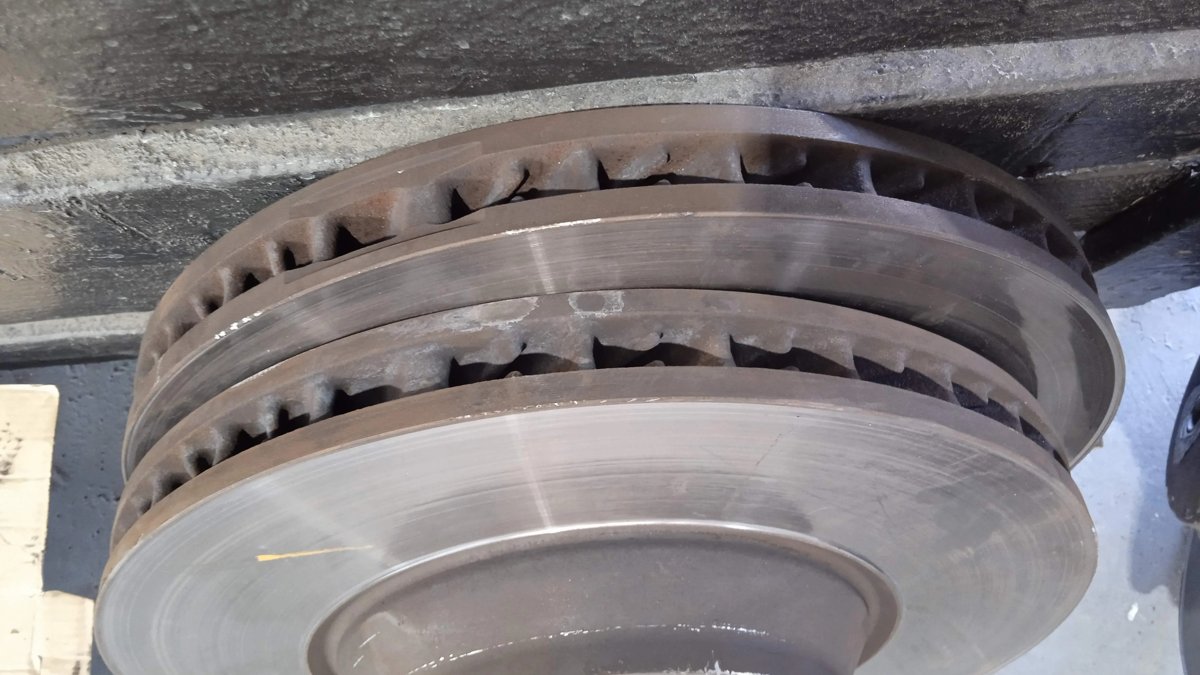
- Disc thickness variation. This is what people mean when they say “warped discs.” The disc surface wears unevenly over time, usually from heat and pad material building up in patches. It is not that the metal has physically bent, it is uneven wear, and it means the pad grips unevenly as the disc spins, which you feel as a pulse.
- Pad deposits on the disc. Heavy or hard braking, especially from high speed, can heat-harden patches of pad material onto the disc surface. Those patches are higher than the rest of the disc, so the pad rides over them unevenly.
- Discs worn too thin. Every disc has a minimum thickness. Once it wears past that point, it flexes and wears unevenly under braking pressure.
- A sticking caliper, less commonly. If a caliper doesn’t release fully, that wheel’s disc overheats and wears unevenly while the others stay normal.
- Wheel bearing or suspension wear, rarely. This can show up mainly under braking load, but it is usually accompanied by other signs like a wandering steering wheel at speed.
What happens if you leave it
A shuddering pedal is not just uncomfortable. It means the pads are not gripping the disc evenly across the full braking surface, which can lengthen your stopping distance, exactly when you need it shortest. Left alone, the uneven disc surface accelerates wear on the pads and, eventually, the calipers.
It is also a cost problem, not just a safety one. Caught early, a set of discs with early-stage thickness variation can sometimes be skimmed back to a true surface. Left too long, the discs wear past the point where skimming is possible and need full replacement, sometimes taking pads and calipers with them. A small job now tends to stay small. A small job ignored does not.
What to do now
- You don’t need to pull over on the side of the road for a pulsing pedal alone. But do stop driving and arrange a tow if the pedal feels soft, sinks toward the floor, or the car pulls hard to one side under braking.
- Note when it happens: only under hard braking, only at higher speed, or all the time. This helps with diagnosis.
- Listen for grinding or scraping. That’s a different, more urgent problem, usually pads worn down to metal.
- Check your brake fluid level if you can do so safely. Low fluid with a soft pedal is a reason to get the car looked at immediately.
- Otherwise, book a brake inspection in the next few days rather than waiting for it to get worse.
Not sure if it’s the brakes or something else? Book a brake check with Fangio →
What we do at Fangio
We start by confirming the shudder is braking-related and not tyres, wheel balance, or suspension. Once that’s confirmed, we measure disc thickness and check for thickness variation directly, rather than guessing from the symptom alone. We also check pad wear and look for uneven deposits on the disc surface, and check the calipers to rule out one sticking and overheating a single wheel.
From there it’s one of two outcomes: the discs can be skimmed back to a true, even surface, or they’ve worn past that point and need replacing along with the pads. Either way, we tell you which one it is and why before we do the work, we don’t sell a replacement where a skim will do, or the other way round. A straightforward inspection and fix is usually a same-day job; if discs or pads need to be ordered in, we’ll tell you upfront.
While the car is in, we also check the things that commonly ride along with this problem, pad wear on the other wheels, and whether a caliper needs attention. All labour carries our 12-month / 10,000 km warranty from the invoice date, backed by 20+ years of mechanic experience. Our Hermanus branch is RMI-approved.
Questions people ask
Why does my car shake only when I brake?
Because the cause is on the brake disc surface itself, uneven wear or pad deposits that only create a problem when the pad clamps down on the disc. Drive normally and there’s nothing for the pad to grip against, so no vibration.
Is it safe to drive with a shuddering brake pedal?
For a short trip, usually yes, as long as the pedal feels firm and stopping distance feels normal. It is not something to leave for weeks, though, the underlying wear only gets worse, and it can eventually affect how well the car stops.
Can you skim brake discs instead of replacing them?
Often, yes, if the disc is still above the minimum legal thickness once the uneven surface is machined off. Once it’s below that thickness, skimming isn’t an option and the disc needs replacing. Read more on disc skimming.
How do I know if my brakes need replacing rather than just a skim?
That comes down to a thickness measurement, not guesswork, which is why an inspection matters more than trying to diagnose it yourself. See the signs your brake pads may need replacing.
Is a shaking steering wheel the same problem as a shaking pedal?
Often, yes, both can come from the same uneven front disc surface. If you feel it in the wheel but not the pedal, or the other way round, it’s still worth having both checked at the same visit. More on brake fitment and inspection.
Book a brake inspection
A pulsing pedal or shuddering wheel under braking is worth sorting before it turns into a bigger job. Fangio Auto Randburg and Fangio Auto Hermanus both carry out brake inspections, disc skimming and disc or pad replacement, backed by a 12-month / 10,000 km labour warranty. Get in touch to book at your nearest branch →
Already have a quote?
Get an honest second opinion
Send it over and we’ll review it, explain it plainly, and beat it where we can.