Brake pads are a wear item. They are designed to be used up and replaced, and your car gives you plenty of warning before they become dangerous. The trick is knowing which warnings point at the pads and which point at something else in the brake system, because the two need very different work.
Signs your brake pads are worn
A high-pitched squeal when you brake
Most pads have a small metal wear indicator built in. When the friction material wears down to the limit, that tab contacts the disc and squeals deliberately. It is the pad telling you it is near the end. Booked in promptly, this is a straightforward pad replacement.
A harsh grinding or metallic scraping
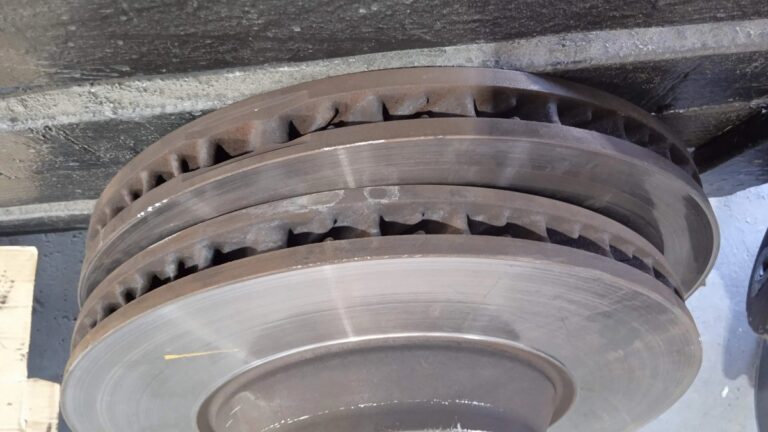
This is the sound you do not want. It usually means the friction material is gone and the metal backing plate is running directly on the disc. Every stop from here scores the disc, which turns a pad job into a pad and disc job. Stop driving on it and get it looked at.
The pad looks thin through the wheel
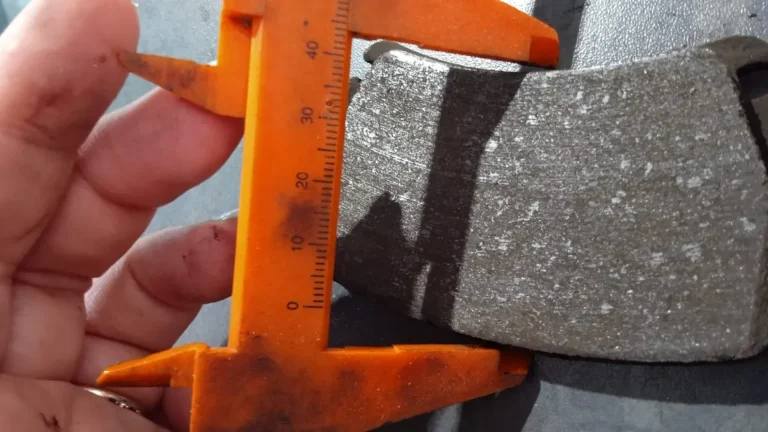
On many cars you can see the outer pad through the wheel spokes. New pads carry roughly 10 to 12 mm of friction material. Once you are down to about 3 mm it is time to plan the replacement, and below that it is urgent. If you cannot see clearly, any workshop can measure it in minutes.
Shudder or vibration through the pedal
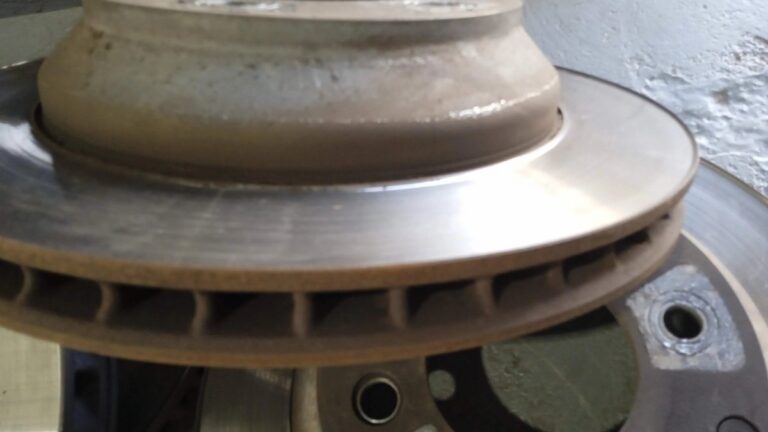
A pulsing pedal under braking usually points at the discs rather than the pads, specifically uneven disc thickness. Pads still matter here, because they are what feels it, but the fix involves the discs. Our guide to brake disc skimming covers whether a disc in that condition can be machined or needs replacing.
Longer stopping distances
If the car takes noticeably further to pull up, or the pedal needs more effort than it used to, worn pads are one likely cause. This one creeps up gradually, which is exactly why it gets ignored.
The brake warning light
Some vehicles have a dedicated pad wear sensor that lights the dash when the pads are due. Others use the same lamp for the handbrake or a low fluid level, so do not assume the light means pads. Have it read rather than guessed at.
Warning signs that are usually not the pads
These matter because replacing pads will not fix any of them.
A soft or spongy pedal normally points at air in the hydraulic system, old fluid that has absorbed moisture, or a leak. It is a hydraulic fault, not a friction one.
A burning smell after braking suggests the brakes are overheating, often from a caliper that is sticking and holding the pad against the disc. That will destroy a new set of pads quickly if the caliper is not sorted first.
Fluid pooling near a wheel or a dropping reservoir level is a leak. Brake fluid is what transmits the pedal to the caliper, so a leak is a straight safety issue and needs immediate attention.
Brakes that grab far too sharply can indicate contaminated pads, a seized caliper slide or a fault in the servo. Again, not something new pads alone will cure.
Arrive Alive recommends having brakes inspected at least twice a year and any time braking feel changes.
How long should a set of pads last?
There is no single figure, and anyone quoting one is guessing. Front pads wear faster than rear because the front does most of the braking. Stop-start city driving, a heavy vehicle, towing, hills and hard braking all shorten pad life considerably compared with mostly open-road use.
The practical answer is to have them measured at every service and replaced on thickness rather than on mileage.
What waiting actually costs
Pads are one of the cheaper jobs on a car. Discs are not. The gap between “the pads are squealing” and “the pads are grinding” is the gap between replacing a wear item and replacing a wear item plus the discs it has chewed through.
Beyond the money, worn pads lengthen your stopping distance at exactly the moment you need it shortest.
Book a brake check at Fangio Auto Service
We measure the pads and discs, check the calipers and fluid, and tell you what actually needs doing rather than selling you the full set every time. If the pads have life left, we will say so. Brake work forms part of our vehicle service, or see our dedicated brake repairs page for more.
Two branches. In Randburg, call 011 326 3133 or WhatsApp 082 402 3517. In Hermanus, call 087 164 1041 or WhatsApp 060 616 2948. You can also contact us online to book a brake inspection.
If your brakes are grinding, do not wait for the next service. That noise is costing you money every time you stop.
Already have a quote?
Get an honest second opinion
Send it over and we’ll review it, explain it plainly, and beat it where we can.