The car feels flat, there is a hiss under acceleration, and someone says the turbo is finished. Before you approve a turbo or intercooler, test the full boost system. The fault may be a split hose, loose clamp or cracked intercooler.
The quick answer
A boost leak and a failed turbo can produce overlapping complaints, so symptoms alone do not identify the failed part. Garrett Motion tells workshops to diagnose before replacing a turbo, including checks for hoses, pipework, exhaust restrictions and intercooler leaks or cracks.
So the first thing worth paying for is a diagnosis, not a part.
What the intercooler actually does
A turbocharger compresses air before it reaches the engine, which heats it. The intercooler sits between the turbo and inlet and cools that compressed air.
Its pipes, hoses and clamps form one pressurised system. A leak between the turbo and inlet manifold lets boost escape before it reaches the engine, causing power loss and sometimes a fault code.
Symptoms that point at a boost leak
These signs do not confirm the failed part, but they justify a pressure test.
- Noticeable power loss, worst when pulling hard, on a hill or overtaking
- A hiss, whistle or air-rushing noise that changes with throttle
- The engine warning light on, often with underboost or boost deviation codes
- The car dropping into limp mode and refusing to rev past a set point
- Oily film inside the piping, or a wet dirty patch near a clamp or hose joint
- Black smoke on a diesel under load, as the fuelling no longer matches the air arriving
A light oily mist inside the pipes is common on many turbo engines and is not automatically a failed turbo. Heavy oil, pooling, or oil dripping from a joint needs to be looked at properly.
Faults that feel identical but are not the intercooler
This is where money gets wasted. All of these can give power loss, a warning light or limp mode on a turbo engine:
- A collapsed or split boost hose, or a clamp that has worked loose
- A blocked or restricted air filter or intake pipe
- A blocked catalytic converter or diesel particulate filter creating exhaust back pressure
- A faulty boost pressure sensor or mass air flow sensor sending wrong readings
- A sticking or seized variable geometry mechanism on the turbo itself
- Fuel delivery faults, including injectors and low fuel pressure
- A worn turbo with excessive shaft play or damaged wheels
The intercooler is one possibility, not the default answer. Replacing it will not fix a blocked filter or failing sensor.
How a workshop actually tests it
The point of a boost system test is to make the leak show itself instead of guessing from symptoms.
- Read the codes and live data. Requested boost against actual boost shows whether the engine is short of pressure, by how much, and whether it happens at idle, under load or only at high boost.
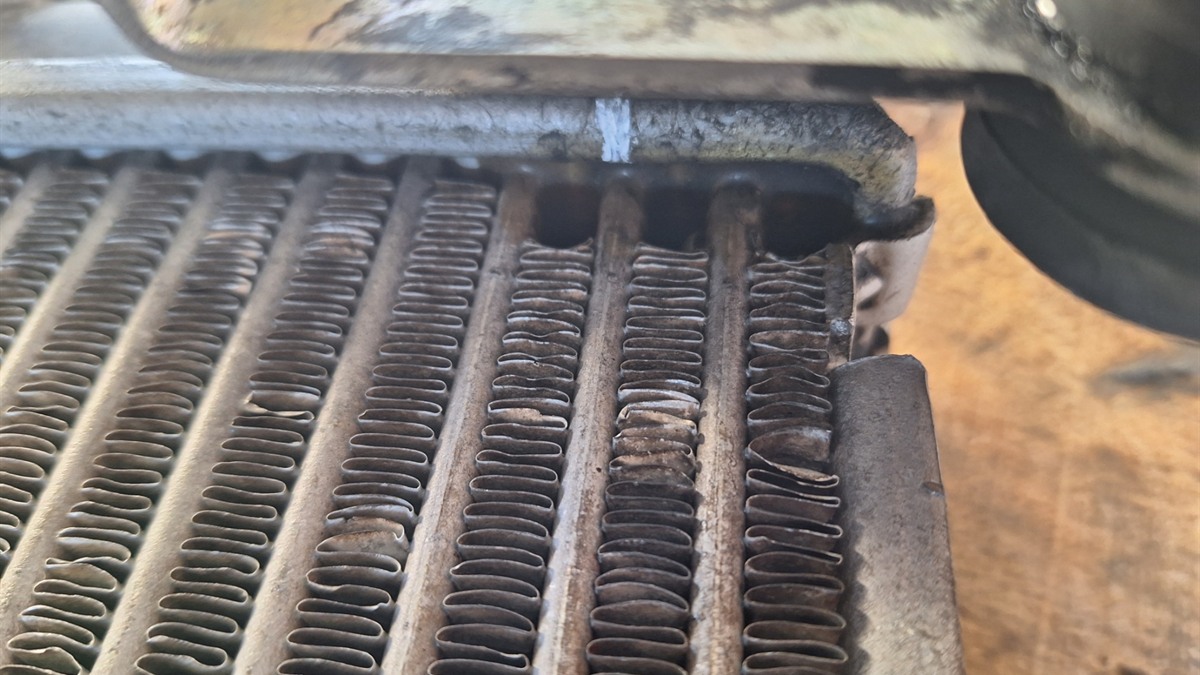
- Inspect the system cold. Hoses are checked for splits and rubbing, clamps for tightness, and the core and end tanks for cracks, stone damage, corrosion and oil staining.
- Pressurise the system. With the intake sealed, regulated air is applied using the procedure for that vehicle or system, not a fixed pressure. If pressure falls, the leak must be located.
- Add smoke if needed. Escaping smoke can reveal small cracks and awkward joints.
- Check the rest of the loop. Air filter, intake pipework, exhaust restriction, sensors and turbo shaft play may also need checking so the whole path is cleared. How many of those happen in one visit depends on what the first results show and how much access the vehicle allows.
- Retest after the repair. A second leak can show up once the first one is fixed, so the system is pressure and road tested again.
There is more on how we approach fault finding on our car diagnostics page.
Hose and clamp faults versus core damage
Once the leak is located, the repair splits into very different jobs.
Hoses, pipes and clamps. Rubber can crack, clamps can loosen and pipes can chafe against brackets. Repair time depends on access and parts availability.
The core and end tanks. Stones, debris and minor knocks can bend fins, crack the core or split a plastic end-tank seam. Testing must confirm the fault.
Blocked rather than leaking. A core fouled with oil inside, or clogged with mud and insects outside, restricts flow instead of leaking. Cleaning may recover it, but where the oil is coming from still has to be found.
Repair or replace
The test decides the repair. A failed hose, pipe or clamp may need replacement or secure refitting. Core repairability depends on its material, construction, damage location and whether it passes a pressure test afterwards. Some aluminium cores can be professionally repaired, while plastic end-tank or deep core damage may require replacement. A blocked but sound core may be cleaned. Bent fins without a leak may need no repair.
We do not publish a rand figure. Access and part prices vary by vehicle, so the quote must follow diagnosis.
Is it safe to keep driving
This cannot be decided from a distance. A boost leak can worsen, trigger limp mode or leave you without usable power.
Only consider limited, gentle driving while the car is stable, with no smoke, oil loss, rising temperature, new noise, warning escalation or severe power loss. Otherwise, stop driving.
On a diesel, running with air and fuel out of balance can increase soot production and add to the load on the particulate filter, depending on the fault and how the engine management responds. Limp mode also makes the car slow to respond when you pull away or overtake, which is a real risk in traffic.
Mild power loss with no warning light means book a diagnosis soon. A warning light, limp mode, smoke or a loud new noise means book it now and keep the driving short and gentle. A pipe that has blown off, an engine that will not rev, oil pouring from a joint, or a temperature gauge climbing means stop driving and have the car towed in.
Book a boost system diagnosis in Randburg
If you have been searching for intercooler repair near me in Randburg or nearby Johannesburg suburbs, Fangio has repaired and serviced cars in Randburg since 2009. Send the make, model, year, engine and symptoms so we can test before quoting parts.
- Call us: 011 326 3133
- WhatsApp us: 082 402 3517
- Visit us: 110 Susman Ave, Blairgowrie, Randburg, Johannesburg
- Hours: Monday to Friday, 07:30 to 16:30. Closed Saturday and Sunday.
If the test shows the turbo itself is at fault, our turbo replacement page covers that work. See the full offering on our services and repairs page, get directions from the Randburg branch page, or send your details through the contact page.
FAQ
How do I check my intercooler for leaks?
You can look for oil staining, cracks in the end tanks, stone damage to the core and loose or perished clamps. A visual check will not find a leak that only opens under boost, though. That needs the system pressurised, and smoke added if the leak is hiding.
Why is there oil in my intercooler piping?
A light oily mist is common on turbo engines and is not automatically a failure. Heavier oil, pooling in the pipe or oil at a joint needs investigation, because it can point at turbo seal wear, crankcase ventilation problems or an engine breathing more than it should.
Will a bigger intercooler fix my power loss?
Not if the car has a fault. A larger core is a performance modification, not a repair. If the car has lost power against how it used to drive, something has broken or worn, and a bigger part on top of an unfixed fault will not bring it back.
Already have a quote?
Get an honest second opinion
Send it over and we’ll review it, explain it plainly, and beat it where we can.