A car service is worth it when it follows your vehicle’s proper schedule and catches wear before it becomes a repair. Oil, filters, fluids, brakes and diagnostic checks cost less to maintain than to replace after a failure. The useful question is not whether every service is cheap. It is whether skipping one is likely to make the next bill bigger.
That’s the whole argument in four sentences. The rest of this article is about where the value actually sits, which parts of a service earn their keep, where drivers get caught trying to save money, and when putting a service off stops being a saving and starts being a gamble.
What a service actually prevents
Most of what fails on a car doesn’t fail suddenly. It wears, gets dirty, runs low or drifts out of spec over months, and the service is the point where somebody looks. Take the items one at a time and the value is easier to see.
Engine oil is the obvious one. Oil doesn’t just lubricate, it carries heat away and holds soot and acids in suspension until you drain it. Run it too long and it thickens, the filter clogs and the bypass opens, and from then on unfiltered oil is going through the bearings. Turbo bearings, timing chain tensioners and variable valve timing units are all oil fed and all expensive. A missed oil change rarely kills an engine on its own. Three missed oil changes on a small turbo petrol engine very often do.
Filters are cheap and boring, which is exactly why people skip them. A blocked air filter leans the engine out and costs you fuel. A blocked fuel filter on a diesel starves the pump, and the pump is one of the dearest parts on the car. A blocked cabin filter is only a comfort issue, until the aircon evaporator starts to stink and needs stripping out.
Fluids are where the quiet failures live. Brake fluid absorbs water and its boiling point drops, so the pedal goes soft on a long downhill when you need it most. Old coolant loses its corrosion inhibitors and starts eating the radiator and water pump from the inside. Neither of those shows up as a warning light. They show up as a repair.
Then there’s the inspection itself. A technician with the car on a hoist will spot a weeping shock, a cracked CV boot, a tyre wearing on one edge or a brake pad down to the wear line. Each of those is a small job now and a bigger one later. A torn CV boot is a boot. A CV joint that ran dry because the boot was torn is a driveshaft. Same with cambelts: the belt itself is not a big job on most cars, but a snapped one bends valves and you’re into an engine rebuild. Our cambelt and timing chain page covers that in more detail.
The false economy problem
There are a few ways people try to make servicing cheaper that end up doing the opposite.
The first is stretching intervals. The manufacturer’s schedule is written in kilometres and in months, and you’re meant to hit whichever comes first. A car that does 8 000 km a year still needs its oil changed every year, because oil ages sitting in a sump too. Our guide on how often you should really service your car goes through the time versus distance rule properly, and if you want the brand by brand numbers, the car service kilometres guide has them.
The second is the “oil and filter only” service, done every time. An oil change is not a service. It keeps the engine alive but nobody has looked at the brakes, the suspension, the belts or the fluids. You can do this for a year or two and feel clever, and then find out the rear pads went metal on metal and took the discs with them.
The third is cheap parts. A budget oil filter with a weak bypass valve, or a “universal” oil that isn’t the grade your engine calls for, saves you a small amount on the day. Modern engines with variable valve timing and tight tolerances are fussy about oil, and the wrong grade is a real cause of premature timing chain wear. Ask what oil is going in and why.
The last one is skipping the service because “nothing’s wrong”. That’s backwards. The service is how you find out whether something is wrong before it costs money. By the time a car tells you itself, you’ve usually already paid for the lesson.
What a service costs, and what it saves
We don’t publish set prices because the right service for a 1.4 hatchback and a 3.0 diesel bakkie are very different jobs. If you want a sense of the range and what pushes a quote up, read how much a major service really costs in South Africa. For what’s actually on the list at a major, there’s what does a major car service include.
The comparison that matters is service cost against repair cost, and it isn’t close. An oil and filter change is a fraction of a turbo. Brake fluid is a fraction of a master cylinder and callipers. A coolant flush is a fraction of a radiator, a water pump and a head gasket. A cambelt kit is a small fraction of an engine rebuild. Even a full major service, done properly with quality parts, usually costs less than one of the failures it’s designed to prevent.
There’s also the resale side. A car with a stamped service book and a folder of invoices sells faster and for more than the same car with nothing. Buyers and trade in valuers ask for the service history first, before they even drive it.
And if your car is still under a manufacturer plan, you don’t have to go to the dealer to keep it valid. We can service under your existing plan and stamp the book.
Warning signs that a service is overdue
Ideally you never see these, because the schedule catches things first. But if the book has slipped, these are the signs the car is now asking for attention.
- The oil on the dipstick is black and thin, or below the minimum mark.
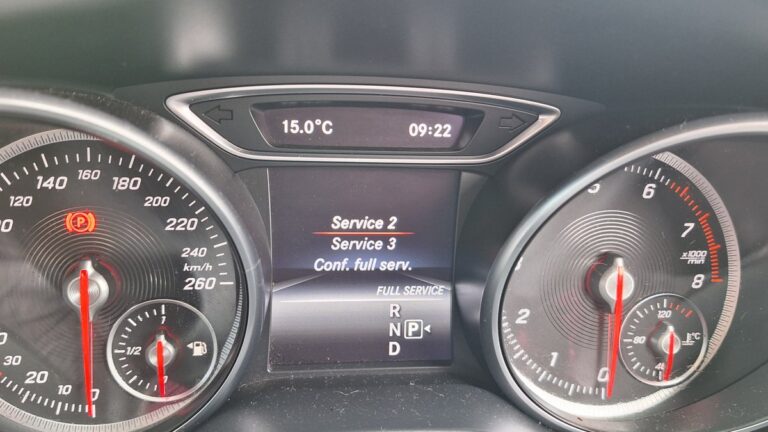
- A service or spanner light on the dash, or the trip counter says the service is due.
- Squeal or grinding when braking, or a pedal that feels lower or softer than it used to.
- The temperature gauge sitting higher than normal, or coolant in the overflow bottle that looks brown or oily.
- Rough idle, hesitation or higher fuel consumption with no obvious cause.
- A rattle on cold start that fades after a few seconds. On chain driven engines this is often the tensioner, and it’s oil related.
- Tyres wearing unevenly, or the steering pulling to one side.
- Any new warning light. Even one that goes away again.
Two or three of these together mean the car needs to come in for a look, not just a service. Our car diagnostics page covers the warning light side and our brake repair page covers what a brake check involves.
When a service should not wait
Some services can slide a couple of weeks without drama. These can’t.
A cambelt at or past its interval is the big one. The belt doesn’t give you a warning. It runs fine until it doesn’t, and on an interference engine the damage is immediate. If you don’t know when it was last done, treat it as due.
Brake work is the second. If the pads are at the wear limit or the fluid is old and the pedal is soft, that’s a safety issue, not a maintenance one. Driving on it costs discs at best.
Anything cooling related on a hot day. A small coolant leak in July becomes an overheated engine in January, and an overheated modern aluminium engine is very often a head gasket.
Before a long trip. If you’re driving to the coast over December, or from Hermanus up to Gauteng, the service should happen before the trip, not after. A breakdown on the N1 costs more than the service would have, and that’s before the tow.
After buying a used car with no history. Assume nothing has been done and do a full service, including fluids and belts. You’re buying a baseline.
Where to get it done
Fangio Auto Service runs two workshops. Randburg is in Blairgowrie on Susman Avenue and looks after Johannesburg’s northern suburbs. Hermanus is in Hermanus Industrial on Steenbras Road and is RMI approved, serving the Overberg. Both do the full car service range, from a minor oil and filter to a full major, on most makes and models.
Every service comes with a stamped service book, an itemised invoice, and a call before any extra work is done. If we find something on the hoist, you hear about it and decide before we touch it.
Frequently asked questions
Is a car service worth it on an old car?
Usually more so, because old cars have less margin. The parts are already worn and the fluids have already done their time. What changes is the priority: on an older car you’d rather spend on oil, brakes and cooling than on things that don’t affect whether it keeps running.
Can I skip a service if I hardly drive?
You can stretch the kilometre interval, but not the time interval. Oil oxidises, brake fluid absorbs water and rubber perishes whether the car moves or not. Once a year is the floor for most cars.
Is an oil change the same as a service?
No. An oil change is one line on a service. A service includes the inspection, the filters and the fluid checks. Doing oil only for years is one of the most common ways cars end up with an expensive surprise.
Does a service have to be done at the dealer to keep my warranty?
Not in South Africa. Under the Right to Repair guidelines you can service at an independent workshop, as long as the work follows the manufacturer’s schedule and uses parts of matching quality. Our right to repair page explains it.
How do I know if the service was actually done properly?
Ask for the invoice with the parts listed, check the oil on the dipstick is clean, and check the service book is stamped with the date and kilometres. A workshop that won’t show you the old parts on request is a workshop to think twice about.
Book a service before it becomes a repair
If the service book has slipped or you’re not sure when the last one was, book it in and we’ll tell you what it actually needs. Get a quote, or call Randburg on 011 326 3133 and Hermanus on 087 164 1041.
Already have a quote?
Get an honest second opinion
Send it over and we’ll review it, explain it plainly, and beat it where we can.