Your temperature gauge sits right where it should on the open road, then starts climbing the moment you hit stop-start traffic or sit idling at a light. It is a common pattern, and it almost always points to the electric cooling fan, not the engine itself. It is not safe to keep driving with the needle in the red, but for now, the fault is worth understanding before you decide what to do next.
What you are noticing
- The gauge is normal at speed on the highway or open road.
- The needle climbs when you slow down, sit in traffic, or wait at a light.
- It can drop back to normal once you are moving again.
- You may hear the fan not switching on at all when you park and leave the engine idling.
- In warmer weather or heavier traffic, the aircon may blow warmer than usual, or a warning light or overheating alert may appear.
What is usually causing it
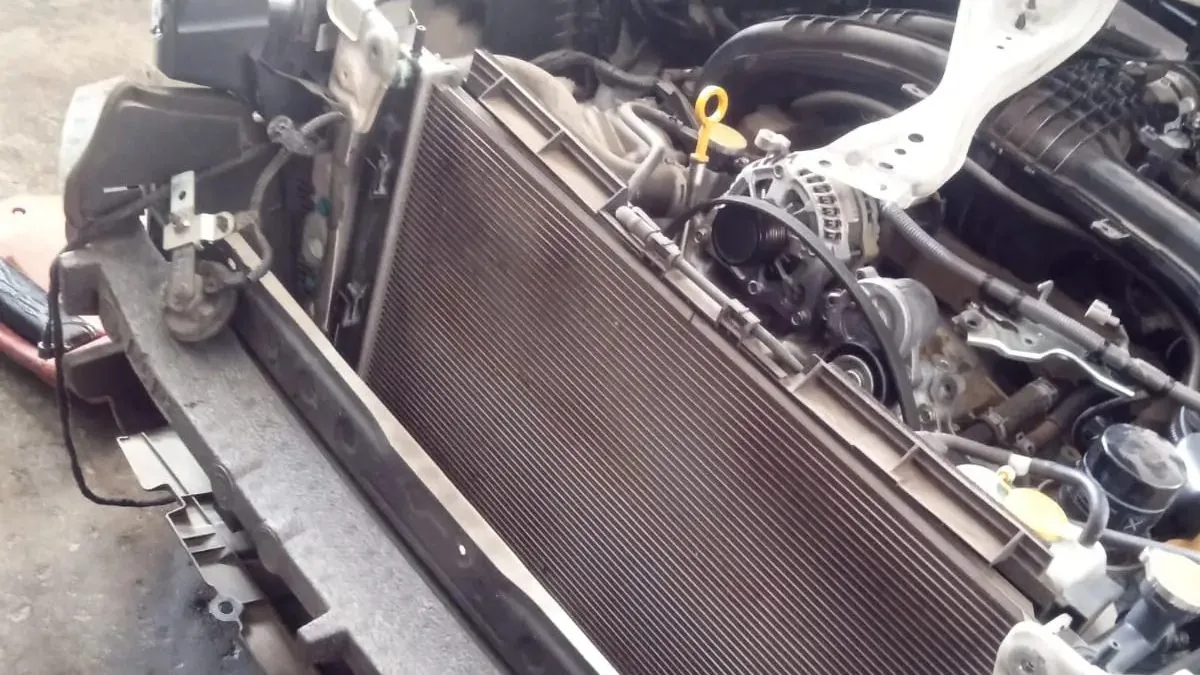
At speed, air is forced through the radiator whether the fan works or not. Stop, and that airflow disappears. The electric fan is the only thing left cooling the radiator. If the fan is not doing its job, the engine cooks in traffic and cools down again once you are moving.
Three parts are usually behind it, most common first:
- A blown fuse. The simplest fault and the first thing worth checking. A fan pulling too much current, or a wiring fault elsewhere, can pop the fuse and leave the fan doing nothing.
- A failed relay. The relay switches power to the fan on command. Relays are mechanical and wear out or stick, so the fan gets no power even though everything else is fine.
- A faulty temperature switch or sensor. This is what tells the fan to turn on in the first place. If it has failed, the fan never gets the signal, even with a good fuse and a good relay.
Less often, the fan motor itself has worn out and does not turn even with power reaching it. Note that this is different from a fan clutch fault, which affects belt-driven fans on older or diesel vehicles and shows up differently, mostly as a loud whirring noise rather than this open-road-fine, traffic-climbing pattern.
What happens if you leave it
Driving with the temperature gauge in the red is how head gaskets fail and engines overheat badly enough to need major repair work, the kind of bill that runs into many thousands of rands, versus the cost of testing three small parts. Push on through slow traffic hoping it cools down, and you risk the coolant boiling over, warping the cylinder head, or being stranded at the roadside. The fault will not fix itself, and it tends to show up again at the worst moment: in traffic, in heat, on a day you needed the car.
What to do now
- If the gauge is climbing but still in the normal range, get it looked at soon rather than waiting.
- If the needle reaches the red zone, pull over safely, switch off, and let the engine cool before driving on. Do not open the radiator cap while it is hot.
- Check you still have coolant in the reservoir once the engine is cool. Low coolant makes any fan fault worse, faster.
- Listen for whether the fan comes on at all when the engine is idling and warm. If it never runs, that is useful information for whoever diagnoses it.
- Get the fan, relay and switch tested before the next hot day or the next traffic jam.
If you searched for this because you heard a loud fan noise on the highway rather than the gauge climbing in traffic, you may be dealing with a fan clutch instead, which is a different part and diagnosis.
Book a check with Fangio Auto Service before it catches you out in traffic. Contact us to arrange a diagnostic.
What we do at Fangio
We do not start by replacing parts. A cooling fan that will not run can be a fuse, a relay, a switch, or the motor itself, and swapping the wrong one wastes your money and leaves the real fault in place. Our car diagnostics checks power at the fan, tests the relay, and checks the temperature switch’s signal, so we know exactly which part has failed before anything is replaced or repaired.
If your gauge has been climbing in traffic, this is also one of the checks covered under Overheating: Temp gauge climbing on our major and minor service options, so it can be picked up alongside a scheduled service rather than as a separate visit. All work carries our 12-month/10 000 km labour warranty, backed by mechanics with 20+ years of experience, at both our Randburg and Hermanus branches.
Questions people ask
Why is my car fine on the highway but overheats in traffic?
At speed, air moving through the grille cools the radiator on its own. In traffic or at idle, that airflow stops, so the electric cooling fan has to do the work alone. If the fan, its relay or its switch has failed, the engine only overheats when you slow down or stop.
Is it safe to keep driving if the gauge is climbing but not yet in the red?
It is worth getting checked rather than pushing your luck, but a gauge that climbs and then settles back to normal once moving is not yet an emergency. If the needle reaches the red zone at any point, stop and let the engine cool rather than continuing.
How do I know if it is the fan, the relay or the switch?
You generally cannot tell from the driver’s seat. All three cause the same symptom. It takes testing power at the fan, checking the relay, and confirming the temperature switch is sending a signal to know which one has actually failed.
Is this the same as a fan clutch problem?
No. A fan clutch is a different part fitted to some belt-driven fans, mostly on older or diesel vehicles, and it usually shows up as a loud whirring or roaring noise rather than the gauge climbing only in traffic. If that is what you are hearing, it is worth mentioning to whoever checks the car so they look at the right part.
Could it just be a fuse?
It is possible, and it is the simplest thing to check first. A blown fuse will stop the fan completely even though the relay and switch are both fine, which is why diagnosis starts there.
What does it cost to find out what is wrong?
Costs depend on the vehicle and what the diagnostic finds, so we would rather quote you directly than guess a number here. Get in touch and we will talk you through it.
Book your diagnostic
If your temperature gauge is fine on the open road but climbs in traffic, get the fan, relay and switch checked before it leaves you stranded or costs you an engine. Fangio Auto Service has two branches, Fangio Auto Randburg and Fangio Auto Hermanus, both offering engine diagnostics and general mechanical repairs, backed by 20+ years of mechanics’ experience and a 12-month/10 000 km labour warranty.
Contact us to book a diagnostic at your nearest branch.
Already have a quote?
Get an honest second opinion
Send it over and we’ll review it, explain it plainly, and beat it where we can.