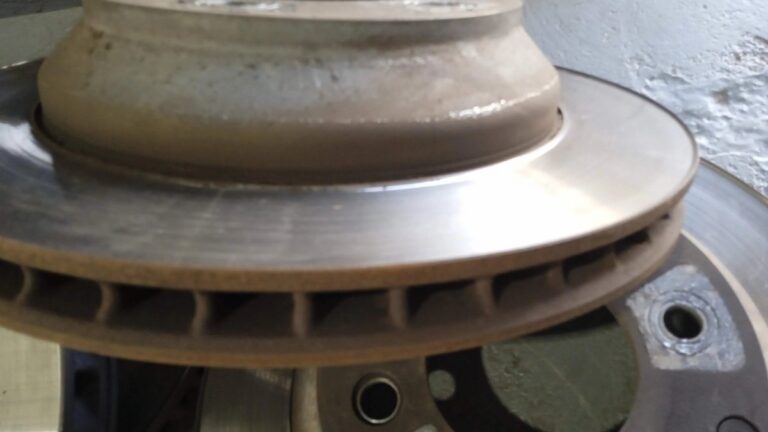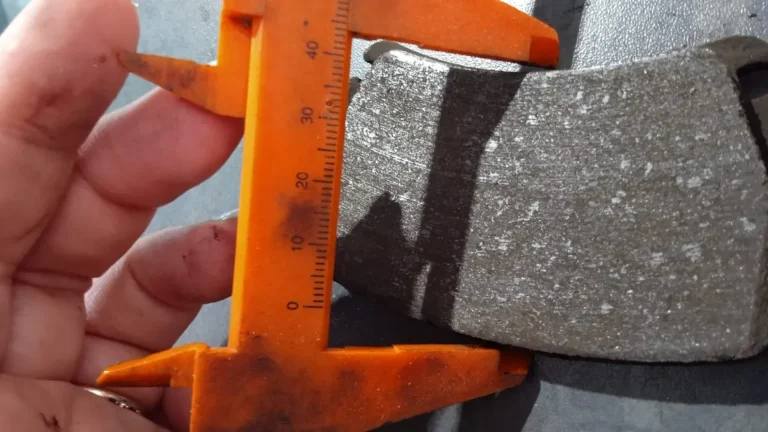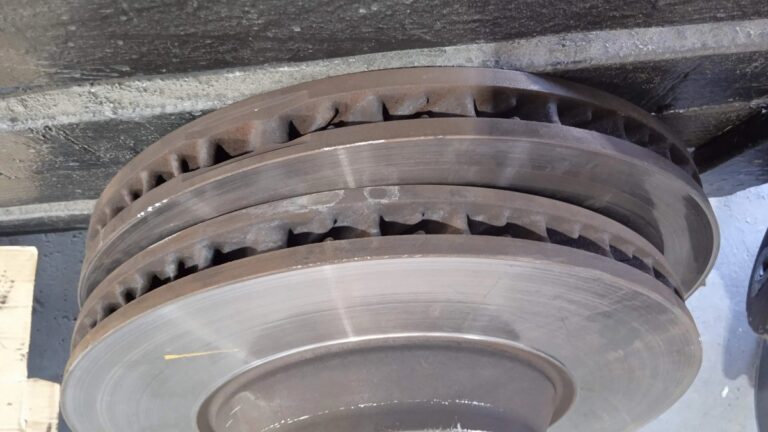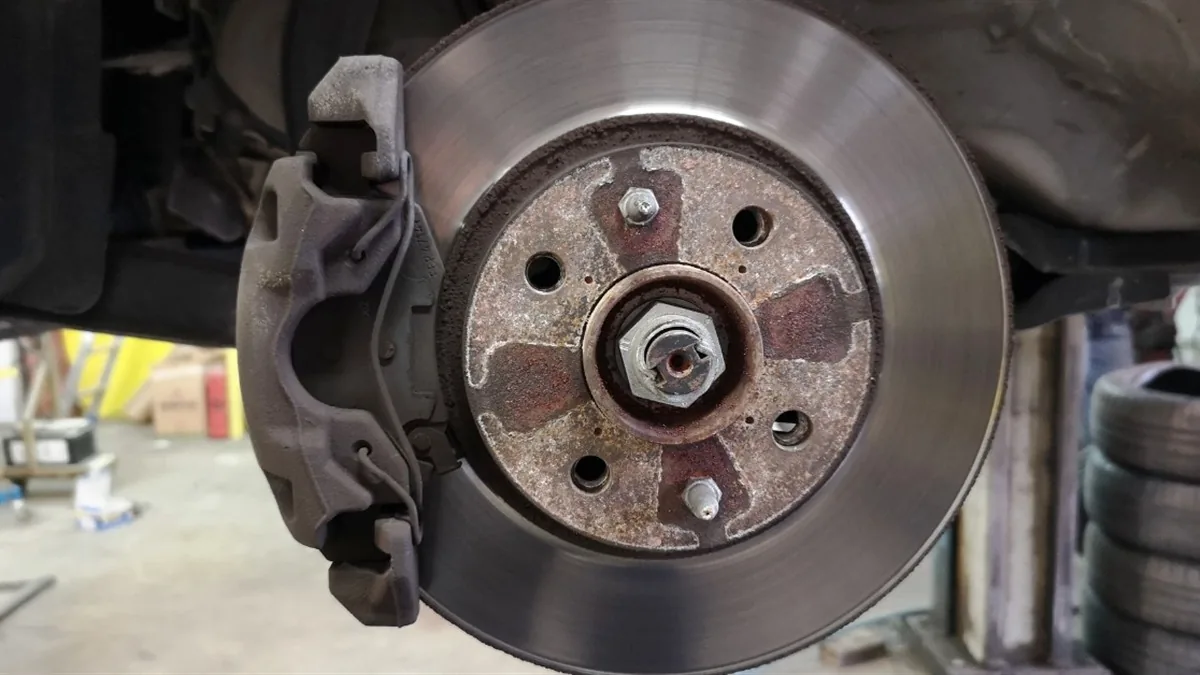
Straight answer first, because it is the thing most people searching for an on-car brake specialist actually want to know. Brake disc machining is part of the brake service at Fangio Auto Randburg, alongside pad replacement and brake fluid changes. Both methods are available here, and neither is done in house. See our brake repair page for the full service list. For off-car machining the disc comes off and goes to a precision skimming specialist. For on-car machining a specialist company brings the lathe to our workshop and cuts the disc where it sits on your vehicle.
That is worth understanding before you approve any brake job, because the two methods are not the same repair. This page covers what the on-car method genuinely changes, why brake shudder so often comes back a few months after a machining job, and what numbers belong on the quote in front of you. For the broader question of whether your discs can be skimmed at all, see our guide to whether you can skim brake discs.
What on-car machining actually means
The two methods sound like the same job with the disc in a different place. They are not. The difference sits in what the disc gets cut true to.
| What differs | Off-car machining | On-car machining |
|---|---|---|
| Where the disc is cut | Removed from the car and cut on a bench lathe | Left on the hub, with the lathe bolted to the vehicle |
| What it is cut true to | The disc’s own centre | The hub the disc will actually run on |
| Assembly runout | Not corrected by the cut. It has to be found and dealt with separately, by cleaning the mounting faces and rechecking runout once the disc is refitted | Cut out as part of the job, because the disc is machined where it sits |
| Thickness limits | The same limits apply | The same limits apply |
| At Fangio Auto Randburg | Offered. The cutting goes to a precision skimming specialist | Offered. A specialist company brings the lathe to the workshop |
Pro-Cut, one of the established on-car lathe manufacturers, describes the on-car method as matching the disc to its hub, so small errors built into the assembly get cut out instead of being left in.
That is a genuine difference, and it matters for one specific fault: assembly runout.
Where assembly runout comes from
Runout is sideways wobble as the disc turns. A disc can have some on its own, but a lot of it comes from everything around it.
- Rust, scale, paint or grit trapped between the hub face and the disc
- A hub face that is no longer flat, from corrosion or earlier damage
- Wheel nuts tightened unevenly or out of sequence
- A worn wheel bearing letting the whole assembly move
- Tolerances stacking up, where the disc sits slightly out one way and the hub sits slightly out the same way
That last point is why a disc that measured perfectly on a bench can still wobble once it is bolted back on.
How runout turns into brake shudder
Runout on its own is usually not what you feel through the pedal. Pulsation comes mostly from disc thickness variation, meaning the disc is fractionally thicker in some places around its circumference than others.
The link between the two is mileage. A disc that wobbles as it turns brushes against the pads at the same spots on every rotation, even with your foot off the brake. Over thousands of kilometres those spots wear slightly thinner than the rest. Now the thickness is uneven, so when you do brake the pads are pushed in and out as the thick and thin sections pass under them. That is the pulse you feel in the pedal and often in the steering wheel too.
It explains one of the most common complaints in brake work: the brakes were sorted, the discs were machined or replaced, and the shudder returned a few months later. If the runout behind the thickness variation was never found and corrected, the fresh surface simply goes the same way. Correcting the surface alone treats the symptom and leaves the cause in place.
What a measured inspection should record
These are the readings that decide the repair. A workshop that skips them is guessing.
- Disc thickness at several points around the disc, taken with a micrometer, not a single reading.
- Thickness variation, the spread between those readings, which is what produces the pulsation.
- Hub-face runout, taken with a dial gauge against the bare hub flange with the disc removed and the face cleaned, so the hub is measured on its own.
- Installed-disc lateral runout, taken with a dial gauge against the disc face once the disc is fitted and the fasteners are tightened in sequence to the correct torque, because that is the wobble the pads actually see.
- Mounting face condition, meaning the hub flange and the back of the disc inspected for corrosion, scale, paint and trapped grit, since debris there adds runout that no disc work removes.
- Surface condition: cracks, deep scoring, heat damage.
- Pad thickness and condition, measured at the same time.
- The parts around the corner: caliper slides and pistons, wheel bearing play, worn suspension or steering components. All of these produce vibration that no disc work will cure.
If your complaint is a warning light rather than a shudder, the starting point is different. Our guide to ABS brake repair covers that side of the system.
The two limits that decide whether machining is even possible
This is where counter advice most often goes wrong. People talk about “the minimum thickness stamped on the disc” as though it were one number. For many vehicles there are two, and they do different jobs.
| The limit | What it means | What it decides |
|---|---|---|
| Machine-to or refinish specification | The minimum thickness the disc must still have once the cut is finished | Whether the disc may be machined at all |
| Wear or discard minimum | The point at which the disc has to come off the car altogether | Whether the disc must be replaced |
Where a manufacturer publishes a machine-to figure, that is the figure governing whether the disc may be machined at all. Finishing somewhere above the discard minimum is not enough on its own. A disc also needs enough metal left after the cut to reach the discard limit in normal use, because a cut that technically passes with almost no margin is a repair you pay for twice.
Hyundai’s own rotor resurfacing guidance makes the same point from the manufacturer’s side: measure thickness before machining, measure it again after, and recheck runout once the work is done. The reading that matters is the one taken afterwards.
Some faults rule out machining regardless of the numbers. Cracks, heat damage, or scoring deeper than the machinable layer all mean replacement. Many current discs are also built lighter than older designs, leaving less spare metal between new and the limits, so a disc can stop the car well and still be a poor candidate for a cut.
This is also the part of the job that does not care which method is used. An on-car lathe and a precision bench lathe both cut metal off a disc that has a finite amount of it, so if the numbers say there is not enough left, neither one is the answer.
What a brake quote should show you
Ask for these in writing before you agree to anything:
- The readings above, each next to the manufacturer’s machine-to and discard figures for your vehicle
- Whether the recommendation is machining or replacement, and which measurement drove it
- Whether the discs will be measured again after any machining, and the brand or quality level of any replacement pads
- Labour, and the warranty on parts and work
If a quote arrives with no numbers on it, ask for them. On this job the measurements are the entire argument.
Book a measured brake check at Fangio Auto Randburg
We have been repairing and servicing cars in Randburg since 2009.
To be clear about what we do and do not do. Brake disc machining is part of our brake service, along with pad replacement and brake fluid changes, and neither method is done in house. Off-car, the disc comes off and goes to a precision skimming specialist. On-car, a specialist company comes to us with the lathe and cuts the disc on the car. What happens first, either way, is the inspection: the discs and pads are assessed and measured, and you are told whether a skim is suitable, whether replacement is the safer call, or whether the fault is somewhere else in the corner altogether. If the readings say your discs are still serviceable, we say so.
- Call us: 011 326 3133
- WhatsApp us: 082 402 3517
- Visit us: 110 Susman Ave, Blairgowrie, Randburg, Johannesburg
- Hours: Monday to Friday, 07:30 to 16:30. Closed Saturday and Sunday.
See the wider workshop offering on our car repairs in Randburg page, find directions on the Randburg branch page, or send your vehicle details through our contact page.
FAQ
Does Fangio Auto Randburg skim brake discs?
Yes. Disc machining is part of our brake service at Randburg. The cutting itself goes to a precision skimming specialist rather than being done on the car in our workshop, so we do not offer on-car machining. Before anything is cut we assess and measure the discs and pads and tell you whether a skim is suitable or whether replacement is the safer choice. You can read more in our brake disc skimming guide.
Is on-car machining better than off-car machining?
On-car machining cuts the disc true to the hub it actually runs on, which a bench lathe cannot do, so it addresses assembly runout in a way off-car machining does not. What it does not do is remove the need for the measurements, and neither method helps if the disc has too little metal left or too much damage to be machined in the first place. Off-car machining on precision equipment, with the hub face properly cleaned and the runout rechecked once the disc is refitted, deals with the same fault by a different route.
Will machining fix my brake shudder?
Only if the shudder comes from disc thickness variation or runout and the discs still have the material to be machined within specification. If the cause sits elsewhere, such as a sticking caliper, a worn wheel bearing or worn steering and suspension parts, machining will not fix it. That is why the measured inspection comes first.
How do I find my disc’s machining and discard limits?
The discard minimum is normally cast or stamped onto the disc itself. The machine-to or refinish figure, where the manufacturer publishes one, comes from the vehicle specification rather than the disc. Both should appear on your quote next to the measured reading so you can see the margin for yourself.
Should the pads be replaced at the same time?
That is decided at the inspection, not by default. Pads that are worn, glazed, contaminated with oil or brake fluid, cracked or wearing unevenly need replacement. Whether pads in better condition may be reused has to follow the relevant vehicle manufacturer and friction material procedure, so the answer comes from the measured pad thickness and condition on your car.
Already have a quote?
Get an honest second opinion
Send it over and we’ll review it, explain it plainly, and beat it where we can.