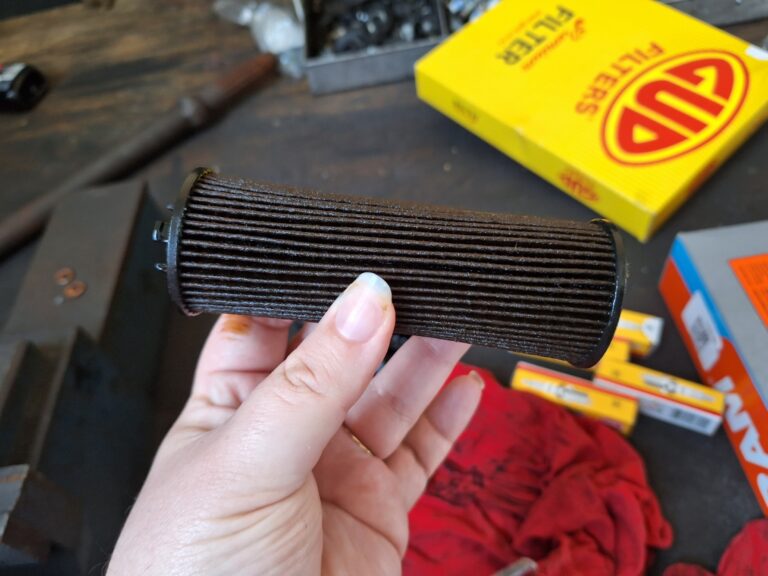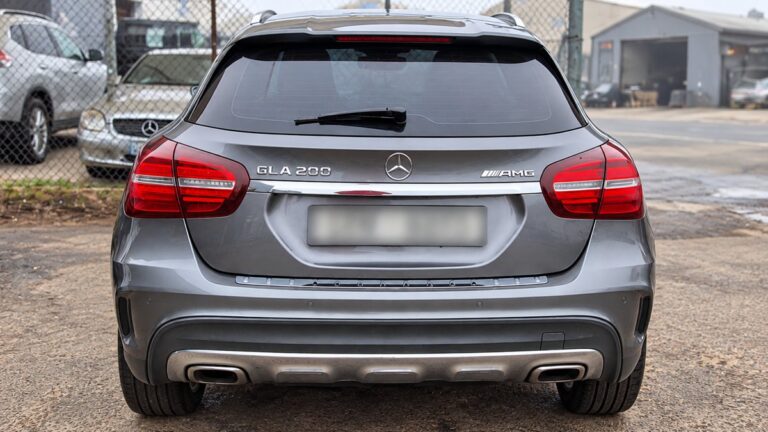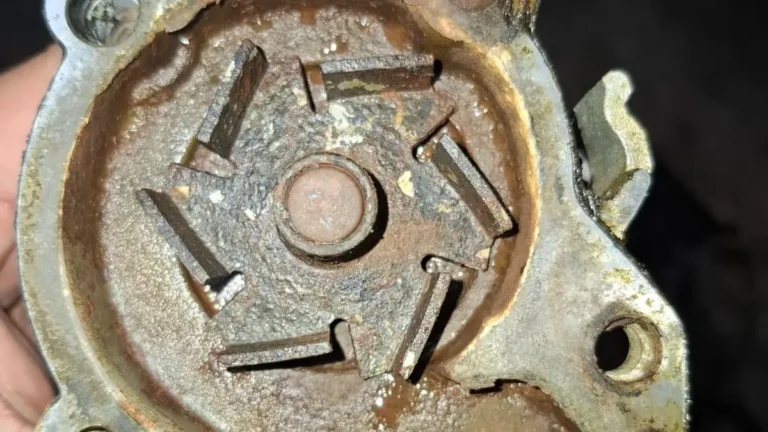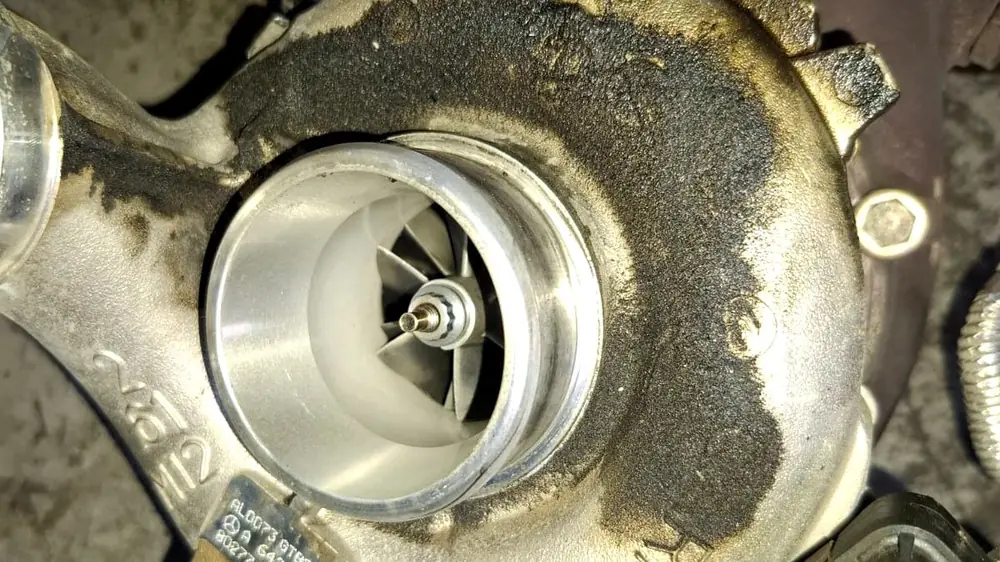
A whine, a cloud of smoke or a flat accelerator pedal is a symptom, not a diagnosis. Each of those can come from a failing turbocharger. Each of them can also come from something simpler sitting right next to it. That is why a turbo job should start with a proper boost-system and engine check, never with a parts order.
Garrett Motion, one of the original turbocharger manufacturers, makes the same point in its own diagnostic guidance. Lost power, noise, smoke and heavy oil use often trace back to the engine, the air path or the exhaust rather than to the turbo itself. BorgWarner’s troubleshooting material works the same way, listing several possible causes behind every single symptom.
This guide covers what the common symptoms really point at, what tends to imitate turbo failure, what a proper diagnosis checks, and what belongs on your quote before you approve anything.
Symptoms and the faults that imitate them
Treat this as the starting point for a conversation with your workshop, not as a self-diagnosis. The causes overlap, and more than one can be true at the same time.
| Symptom | Possible turbo-related cause | Common look-alike fault | Safe next step |
|---|---|---|---|
| Whine or siren noise that rises with revs | Worn bearings or shaft play in the turbo | A leak on the pressure side of the boost system changing how the air moves | Pressure-test the boost system before touching the turbo |
| Rattle, grinding or metallic scrape under load | Wheel contact inside the housing, or debris damage | A loose or cracked exhaust component resonating | Stop somewhere safe, switch the engine off if it is safe to do so, and arrange recovery rather than driving on |
| Blue smoke from the exhaust | Turbo bearing or sealing-system damage, or oil forced past the turbo because the oil return is restricted or crankcase pressure is too high | Worn valve stem seals or piston rings, or oil reaching the engine from elsewhere | Check oil supply, oil return and crankcase pressure before condemning the turbo. With heavy blue smoke, stop safely, switch off if it is safe and arrange recovery |
| Black smoke from the exhaust | Low boost, so combustion is incomplete for the fuel being delivered, which shows up more readily on diesel engines | Clogged air filter, restricted exhaust or a fuel injection fault | Check the full air path in and out before assuming the turbo |
| Flat pedal and lost boost | Stuck wastegate or variable geometry mechanism, or compressor wheel damage | Split hose or clamp, leaking intercooler, blocked filter, exhaust restriction, sensor fault | Read fault codes and live boost data, then leak-test the system |
| Oil use climbing between services | Oil passing the turbo seals | Engine wear, external leaks, or an oil return path that cannot drain properly | Trace where the oil is actually going before replacing parts. Rapid oil loss means stop safely and arrange recovery |
The pattern in that table is the point. Not one of those symptoms belongs to the turbocharger alone.
Whining, whistling and other noises
A soft whistle from a turbo engine under load is normal. Turbochargers spin extremely fast and they make noise doing it. What matters is a change: a whine that has become louder, higher or more siren-like than it used to be, or a noise that arrives at the same time as lost power.
A rising whine can mean worn bearings or shaft play inside the turbo. It can just as easily mean air escaping where it should not, because a leak on the pressure side changes how the air moves and how the whole system sounds. BorgWarner’s troubleshooting guidance treats noise as a pointer towards several possible causes, not as a verdict on the turbo.
Rattling, grinding or metallic scraping is a different matter. That suggests something is making contact inside the housing, or that debris has passed through a wheel. Where the pieces end up depends on which side is damaged. Compressor-side debris travels with the intake air towards the engine, while turbine-side debris follows the exhaust path. Either way, do not keep driving. Stop somewhere safe, switch off if it is safe and arrange recovery.
Blue smoke, black smoke and oil use
Smoke colour narrows the search. It does not close it.
Blue smoke means oil is burning. On a turbo engine that oil can come past the turbo because the bearing or sealing system is damaged, and it can just as easily be forced past a turbo that is otherwise sound. MAHLE’s 2024 turbocharger damage guide is clear that a restricted oil return line or high crankcase pressure can push oil through the unit, so those are root causes and not merely look-alike faults. Worn valve stem seals and worn piston rings sit on the same list. A turbo that keeps pushing oil after being replaced usually has a drainage or crankcase pressure problem that nobody fixed.
There is a safety point here too. MAHLE warns that oil collecting in the charge-air cooler can be drawn into the intake, where the engine can run on it and overspeed without responding to the accelerator. If you see heavy blue smoke, or the engine revs on its own, stop somewhere safe, switch it off if it is safe to do so and arrange recovery.
Black smoke points to incomplete combustion, meaning more fuel than the air charge can burn properly. That is a common picture on diesel engines. It can follow a boost leak, because the engine receives less air than the fuelling expects. It can equally follow a clogged air filter, a restricted exhaust or a fuel injection fault with no turbo involvement at all. How much smoke you actually see depends on the engine and on how its control system responds, so the colour narrows the search rather than naming the part.
If your oil level is dropping noticeably between services, treat that as its own investigation. Where the oil is going, and why, matters more than the colour of the smoke.
Low boost and lost power
The complaint here is usually a flat pedal. The car pulls like an engine with no turbo at all, or drops into a reduced power mode.
Real turbo faults do cause this, including a stuck or failed wastegate, a seized variable geometry mechanism, or damage to the compressor wheel. But the same flat feeling comes from a split boost hose or loose clamp, a leaking intercooler, a blocked air filter, a restricted exhaust or blocked particulate filter, a fuel delivery fault, or a sensor and actuator fault that makes the engine control unit limit boost deliberately.
A leaking intercooler is a common one, and from the driver’s seat it feels a lot like a dying turbo. Our guide to intercooler repairs and boost leaks covers how that side gets tested.
A warning light does not settle the question either. A general engine light only says the control unit has logged something it is not happy with, and that something may have nothing to do with boost at all. Even a stored underboost or boost-deviation code only says the measured pressure did not match the target. It does not say whether the turbo, a hose, the intercooler, the exhaust side or a sensor is responsible. Codes and live data are the starting point for testing, not the answer.
What a proper diagnosis checks
Anyone searching for turbo charger repairs near me is really looking for a workshop that will find the cause, not just fit a part. A sound diagnostic process works through the whole system:
- Stored fault codes and live data, including actual boost against expected boost
- The air path in: filter, pipework, hoses, clamps, intercooler, and any sensor in that path
- The exhaust side for restriction or blockage
- Oil supply pressure and oil condition, the oil return line, and crankcase pressure and ventilation
- Service history, oil grade and how long the oil has been in the engine
- The turbo itself last: shaft play, wheel condition, wastegate or vane movement, and oil in the housings
Garrett’s guidance is to check the engine and its systems before condemning a turbo, and the reason is practical rather than technical fussiness. If a blocked oil return, high crankcase pressure or a dirty intake killed the first turbo, the replacement meets exactly the same conditions and fails the same way. That is how a single repair becomes two.
Repair or replacement
Not every turbo fault means a new turbo. Some parts around the unit, such as an actuator or the linkage on a variable geometry mechanism, can be dealt with separately depending on the design and what is actually damaged.
Once the rotating assembly is damaged, a general workshop will normally fit a complete replacement unit rather than open the turbo up. Specialist turbocharger firms do remanufacture some units, so an exchange or remanufactured unit may be an option depending on the vehicle and what is available. Ask what type of unit is being quoted before you approve the work.
The right questions before you approve anything:
- What evidence shows the turbo itself has failed, rather than something feeding it?
- What caused the failure, and what is being done so it does not repeat?
- Is the replacement new, remanufactured or exchange, and what warranty comes with it?
- Are the oil feed pipe, oil return line and gaskets included, or extra?
- Is an oil and filter change part of the job, and is the intake being cleaned out?
If a workshop cannot answer the first two, you are buying a part, not a repair.
What belongs on your quote
Before you sign, check that the quote shows the diagnostic work carried out and what it found, the exact part being supplied and its type, the related parts being replaced at the same time, the labour, and the warranty terms. Ask what happens if the fault is still present afterwards. A workshop confident in its diagnosis will not mind the question.
Frequently asked questions
Does a whining noise mean my turbo is failing?
Not on its own. A louder or higher whine can come from turbo bearing wear, and it can also come from a leak on the pressure side. It needs testing, not guessing.
Can an intercooler leak feel like turbo failure?
Yes. Lost boost and a flat pedal feel much the same to the driver whether the turbo is struggling or the air is escaping after it. This is one of the reasons a leak test comes before a turbo quote.
Is blue smoke always the turbo?
No. Blue smoke means oil is burning somewhere. Turbo bearing or seal damage is one route. A restricted oil return or high crankcase pressure can also push oil through a turbo, and worn valve stem seals or piston rings produce the same colour smoke.
Can a turbo be repaired, or does it have to be replaced?
It depends on what failed. Some external components can be addressed on their own. Damage to the rotating assembly usually means a complete replacement unit at a general workshop, though specialist firms remanufacture some units. A proper inspection is what tells you which situation you are in.
Why do people say a replacement turbo can fail again?
Because the conditions that killed the first one are still there if nobody found them. Oil supply, oil drainage, crankcase pressure and intake cleanliness all need to be sorted out as part of the job.
Should I stop driving?
Yes, in some cases. Heavy blue smoke, an engine revving on its own, grinding or rattling from the turbo, rapid oil loss or a severe loss of power all mean the same thing: pull over somewhere safe, switch the engine off if it is safe to do so, and arrange recovery rather than driving to the workshop. Milder symptoms, such as a whine that has changed or a slight drop in pull, still need booking in promptly, but they do not usually call for recovery.
Getting it checked in Randburg
If your car is whining, smoking or feeling flat, the useful next step is a full boost-system and engine diagnosis, not a turbo quote off the symptom. Ask for the cause to be identified and shown to you before any replacement is approved.
You can reach the workshop through the Fangio Auto Randburg branch page or the contact page to book a diagnosis and talk through what your car is doing.
Already have a quote?
Get an honest second opinion
Send it over and we’ll review it, explain it plainly, and beat it where we can.