When a power window will not open or close, the switch is only one possible cause. Understanding the components helps explain what your mechanic needs to check before recommending a repair.
So what components are we dealing with?
- Window Switches
- Power Source
- Window Motor
- Window Regulator (also called a window mechanism).
- Window Tracks and Guides
- Window Glass and Seals
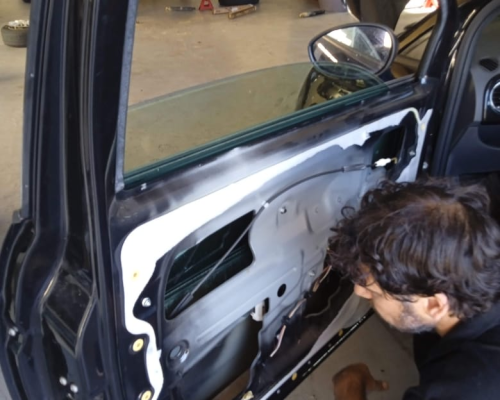
A mechanic’s step-by-step guide to checking your window mechanism
- Confirm the fault and check whether it affects one window or several. Check the ignition setting and window-lock switch first.
- Test the relevant fuses, wiring, switch commands and power supply using the vehicle’s wiring diagram.
- If needed, remove the door trim using the manufacturer’s safety procedure and support the glass before inspecting the motor, regulator, guides and attachments.
- Identify the failed component and quote for the necessary repair before replacing parts.
- After repair, check smooth travel in both directions and perform any required one-touch or anti-pinch reset following the vehicle manufacturer’s procedure.
How do you determine what parts are required for your window to function again?
A diagnostic inspection helps identify the fault before a repair quote is prepared. Contact the workshop to confirm the inspection time and whether you need to leave your car. If parts need to be ordered, a return visit may be needed to complete the repair.
For an electrical window fault, Fangio’s auto-electrical service is available at Hermanus. Use the contact page to discuss your vehicle and arrange an assessment.
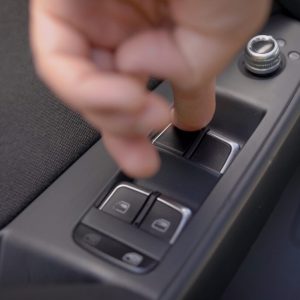
Window Switches
The window switch is the control panel located on the door’s interior that allows the user to operate the window. It typically consists of buttons or toggles for each window, enabling the user to raise or lower them with a simple press or toggle movement.
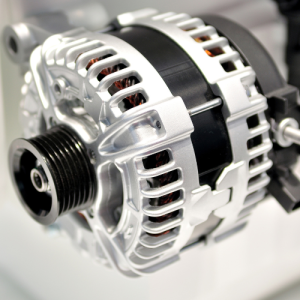
Power Sources
Power windows use the vehicle’s low-voltage electrical system, usually 12 volts in passenger cars. The battery supplies power, while the charging system maintains it when the vehicle is running. Depending on the model, fuses or circuit breakers, relays, wiring and control modules manage that supply. A blown fuse, damaged wire or poor connection can stop a window even when the switch and motor are sound. The supply and ground connections should be tested before parts are replaced.
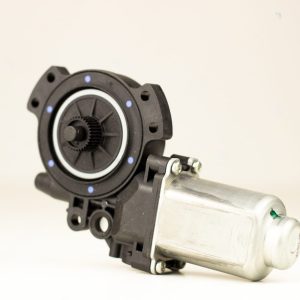
Window Motor
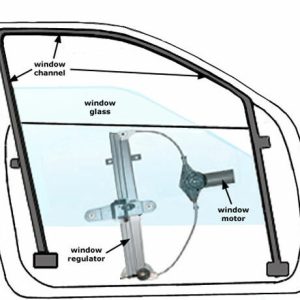
The electric window motor drives the regulator that raises and lowers the glass. It must be able to move the mechanism in both directions. A motor fault can cause slow, intermittent or no movement, but those symptoms can also come from poor power supply or a binding mechanism. Hearing the motor without seeing the glass move may point to a regulator or attachment fault. A technician should check the electrical supply and mechanism before deciding whether the motor needs replacement.
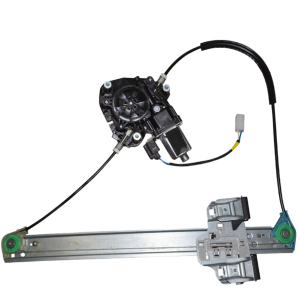
Window Regulator / window mechanism
The regulator supports and moves the glass inside the door. Common designs use cables and pulleys or scissor-type arms. A broken cable, worn gear, damaged slider or loose glass attachment can leave the window stuck, crooked or dropping into the door.
The fault must be identified before recommending replacement. Depending on the vehicle and damage, the regulator may be supplied separately from the motor or as a complete assembly. Stop operating a loose or jammed window and have the glass secured by a technician.
Window Tracks and Guides
Guides and channels keep the glass aligned as it moves. Dirt, damaged channel linings or a bent guide can make the glass bind. Some regulator designs also use rollers or sliders that can wear. Cleaning or adjustment may help, but worn or damaged parts need inspection. Use only the cleaner or lubricant specified for that vehicle and material; do not spray general-purpose oil into the door or switches.
Window Glass and Seals
Glass that has come loose from its attachment can tilt or slip. Damaged rubber seals or a displaced glass channel can also obstruct movement. These faults call for checking the glass mounting and guides, rather than assuming the switch has failed. Cracked glass needs professional assessment.
One-touch and anti-pinch operation
Some vehicles stop and reverse a closing window when resistance is detected. If the glass reverses unexpectedly, check for an obstruction or binding seal. A battery disconnection or window repair may also require the system to relearn its limits. Follow the instructions for your exact vehicle; there is no single reset procedure for all cars. Keep hands clear and do not disable anti-pinch protection to hide a fault.
Weather-related Factors
Ice can stick the glass to its seals, while water entering a switch or connector can cause electrical faults. Let frozen seals thaw rather than forcing the window. Persistent sticking, corrosion or water ingress needs inspection of the relevant seals, drainage and electrical connections.
Interested in learning further details about the functionality of the window mechanism?
For more background, read how window-winding mechanisms work.
Already have a quote?
Get an honest second opinion
Send it over and we’ll review it, explain it plainly, and beat it where we can.