A shaking steering wheel is one of the most common reasons drivers start googling instead of driving. It is unsettling, but it is not usually a mystery. The speed the vibration happens at, and whether it is there when you brake, points straight at the cause. Some of these are a quick, cheap tyre job at a third-party tyre fitment centre (we don’t sell tyres or standalone balancing ourselves, more on that below). A couple are a safety issue that gets worse the longer it runs. Match what you feel below to work out which one you have, and what to do next.
What you are noticing, by speed
20-40 km/h
A low-speed wobble or lateral shimmy through the steering wheel that you notice while crawling in traffic or pulling away. Note: If it disappears at higher speeds, do not ignore it. This is often a sign of a damaged tyre rather than a simple balancing issue.
50-70 km/h
The same vibration, but stronger, and now you can feel it in the pedals or the floor too. This is the speed range where an out-of-balance wheel usually makes itself known.
80-120 km/h
A shake that builds the faster you go, sometimes bad enough to blur your side mirrors. This band has two different causes that feel similar but are not the same job. More on telling them apart below.
Braking only
The car drives smoothly until you brake, then the wheel or the pedal starts to pulse or judder. It disappears the moment you come off the brake.
Idle or parked
A vibration you feel through the wheel, seat or gear lever while the car is standing still with the engine running, but not while driving.
What is usually causing it
20-40 km/h: a damaged tyre or bent wheel. Wheel imbalance is rarely felt at very low speeds. A wobble at 20-40 km/h usually points to a structural issue with the tyre itself, such as a slipped internal steel belt, a sidewall bulge, or a badly buckled rim. This is a safety hazard that needs immediate inspection at a tyre fitment centre before the tyre fails completely.
50-70 km/h and 80-120 km/h: an out-of-balance wheel. A small balancing weight has come off a wheel, or a tyre has worn unevenly. It’s a common, inexpensive fix, and not something we sell as a stand-alone service. If it comes up while you’re already having a repair done with us, we balance the wheel as part of that job.
80-120 km/h: one of two things. If the vibration is a clean shake with no other symptom, it is almost always the same balancing or alignment issue, just more obvious at speed. As above, that’s not something we sell on its own, but we take care of it as part of a repair if one turns out to be needed. But if the shake comes with the steering feeling loose, wandering, or pulling to one side, that points to a worn wheel bearing or a tie rod end rather than the wheel itself. A bearing gives a hum or drone that rises with road speed, sometimes with a knock over bumps. A tie rod gives looseness and vague steering along with the vibration. Both are suspension and steering repairs, and both need to be looked at properly rather than guessed at.
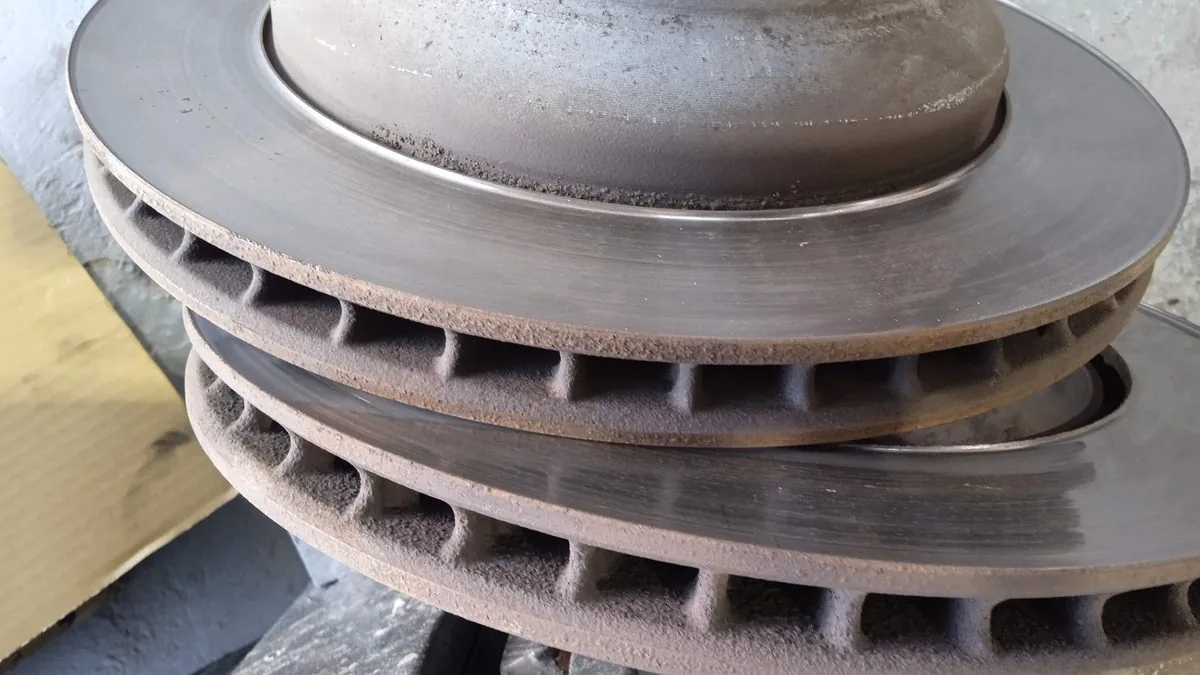
Braking only: warped or worn brake discs. Heat from hard or repeated braking can warp a disc slightly, so the pad grips unevenly as it turns. You feel that as a pulse through the pedal and the wheel each time you brake. This is brake disc work: skimming the disc back to flat where the wear allows it, or replacing it where it does not.
Idle or parked: an engine mount or a misfire. Worn engine mounts let the engine’s own vibration transfer straight into the car instead of being absorbed. A misfire, sometimes caused by oil fouling the spark plugs, makes the engine run unevenly at idle and shakes the whole car with it. Both are picked up on a diagnostic check.
What happens if you leave it
An out-of-balance wheel will not strand you, but it wears your tyres and suspension components unevenly the longer it runs, which turns a cheap fix into a bigger bill later.
A worn wheel bearing or tie rod end gets worse, not better. Left long enough, a bearing can seize or a tie rod can fail, and either one takes your steering control with it. This is not a wait-and-see item.
A warped disc will not improve with more driving. Braking distance gets longer as the pad grip becomes less even, and the problem spreads to the other disc if you keep braking hard to compensate.
A misfire wastes fuel every time you drive and can damage the catalytic converter if it runs on too long. A failing engine mount lets the engine shift under load, which stresses the exhaust, hoses and other mounts around it.
What to do now
- If the shake happens at very low speeds (under 40 km/h), inspect your tyres immediately for visible bulges, flat spots, or unevenness. Drive slowly and directly to a tyre fitment centre; do not take it on the highway, as a damaged tyre belt can cause a blowout.
- If the shake gets worse with speed and the steering also feels loose, wandering, or pulls to one side, stop relying on the car for longer trips and get it checked.
- If it only happens when you brake, brake gently and get the discs checked soon. Do not wait for it to get worse.
- If you feel it at idle or when parked, note whether the engine also feels rough or hesitant on pickup, and get it diagnosed rather than guessed at.
- Either way, before you spend money, get a second opinion on which of these it actually is.
Not sure which one you have? Get in touch and book a check before you spend anything.
What we do at Fangio
Fangio Auto Service checks wheel bearings, tie rod ends and the rest of the steering and suspension for play, looseness and wear, and road tests where needed to confirm what is causing the shake. Brake discs are measured for thickness and run-out; where the wear allows it, a disc is skimmed back to flat rather than replaced outright, which is the cheaper of the two fixes when it is possible. Where a disc is too thin to skim, it is replaced along with the pads it runs against. Engine mounts are checked visually and under load, and a misfire is picked up with a proper diagnostic scan rather than a guess, so you are not paying to replace parts that were never the problem. Most of these checks are done the same day.
We don’t sell tyres, full stop. We also don’t sell wheel balancing or alignment as a stand-alone service. But if a repair you’re having done with us, such as a bearing, tie rod or suspension job, means the wheel also needs balancing or aligning, we handle that as part of the same job rather than sending you somewhere else for it.
Fangio Auto Service has two branches, Randburg and Hermanus, both diagnosing and repairing steering, suspension, brakes and engine issues.
Questions people ask
Why does my steering wheel shake when I brake?
Almost always a warped or unevenly worn brake disc. The pulse you feel each time you brake is the pad gripping an uneven surface. Read more on brake disc skimming.
What is the difference between wheel bearing and tie rod symptoms?
A bearing usually gives a hum or drone that gets louder with speed, sometimes with a knock over bumps. A tie rod gives looseness and vague, wandering steering. Both can accompany a high-speed vibration, and both need a hands-on check to tell apart.
Why does my car shake at idle but not while driving?
Most often a worn engine mount letting engine vibration through, or a misfire from fouled spark plugs unsettling the engine at low revs. See how oil on spark plugs causes this.
Is it safe to keep driving with a shaking steering wheel?
It depends on the speed. If the shake happens at very low speeds (20-40 km/h), it could be a damaged tyre at risk of a blowout, which is not safe to drive on. If the shake only starts around 50-70 km/h with no looseness in the steering, it is usually a minor wheel imbalance and is generally safe to drive carefully until you can get it balanced. However, if the vibration worsens at highway speeds, comes with a loose or wandering feel, or happens under braking, you should get it checked promptly.
Book a check
If you are not sure whether your shake is a tyre job or a workshop job, that is exactly what a check is for. Contact Fangio Auto Service to book with your nearest branch, Randburg or Hermanus, and we will tell you which one it is before you spend anything.
Already have a quote?
Get an honest second opinion
Send it over and we’ll review it, explain it plainly, and beat it where we can.