If your steering wheel vibrates at highway speed, you hear a knock from the front end over bumps, or the wheel feels loose when you turn it, a worn tie rod end is one of the most common causes. It is part of the steering, so it is not something to leave and see. Below is what the symptoms mean, what happens if you keep driving on it, and what to do next.
What you are noticing
Tie rod end wear usually shows up gradually, in this rough order:
- Vibration through the steering wheel, often faint at first and worse the faster you go, especially on the highway.
- A knocking or clunking noise from the front wheels when you go over a pothole, speed bump or uneven road.
- Play in the steering wheel: you can move the wheel a little before the front wheels respond, instead of the car turning the instant you steer.
- The car pulling slightly to one side, or feeling less precise and more vague to steer than it used to.
- Uneven wear on the inside or outside edge of a front tyre, because the wheel is no longer sitting at the correct angle.
- A failed roadworthy or licence renewal check, where the inspector notes excessive play in the steering linkage.
Not every symptom appears at once. A knock over bumps with no vibration yet, or play at the wheel with no noise yet, still points to the same part.
What is usually causing it
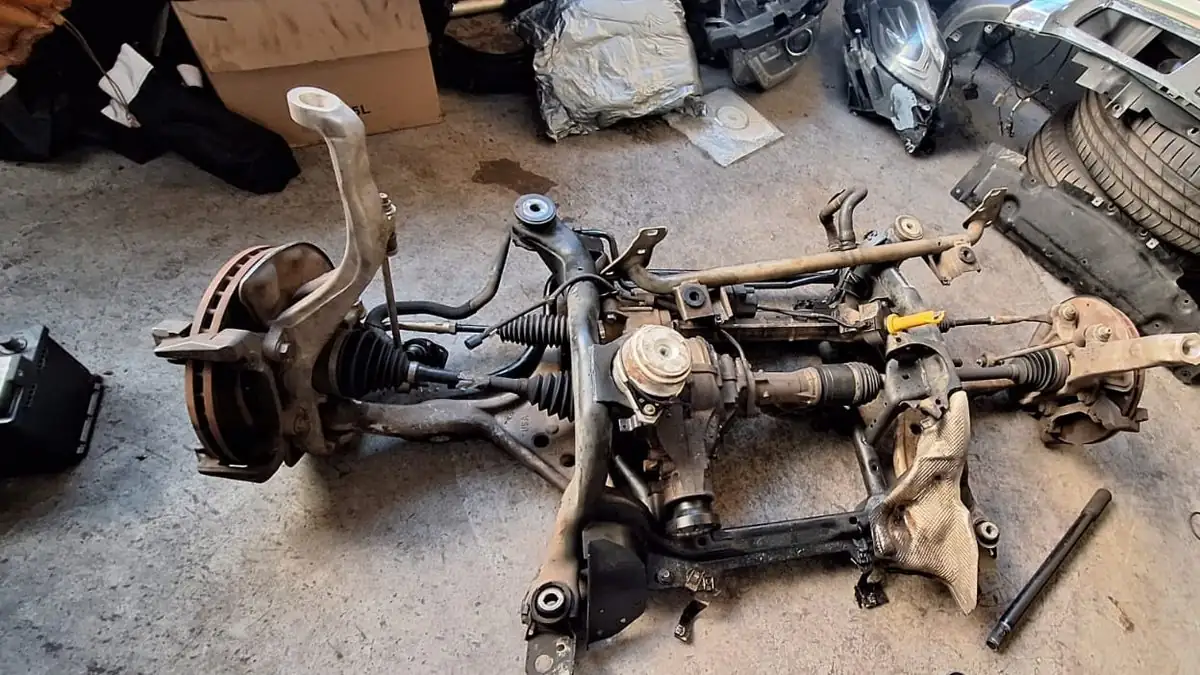
The tie rod end is a small ball-and-socket joint that connects the steering rack to the wheel hub on each side of the car. It is what actually turns the wheel when you move the steering wheel. Like the ball joints in the suspension, it has a sealed bearing inside a rubber boot, and both wear out over time and mileage.
The most common causes, most common first:
- General wear over distance. The joint simply wears loose after enough kilometres, particularly on rougher roads.
- A torn or perished dust boot. Once the rubber boot splits, dirt and water get into the joint and wear it out much faster than normal.
- Hitting a pothole or kerb hard. A single sharp impact can knock a tie rod end out of true even if the rest of the steering seems fine.
- A worn wheel bearing showing similar symptoms. Vibration and a loose feel at the wheel can also point to a bad wheel bearing, which needs a different repair. This is why the noise and play need to be checked on the car, not guessed at.
- Worn shock absorbers adding to the knock. A knocking noise over bumps is sometimes the shocks rather than the steering, or both together. See shock absorber symptoms if the noise feels more like a bounce than a clunk from the wheel itself.
What happens if you leave it
A tie rod end does not fix itself, and it does not fail all at once. It gets looser over time, and the risk grows with it:
- Steering feel keeps getting worse. More play means less precise control, particularly noticeable at speed or when you need to react quickly.
- Tyre wear speeds up. Once the wheel alignment is thrown off, the tyre edge wears unevenly, which means replacing a tyre sooner than it should need it.
- The joint can eventually separate. In the worst case, a badly worn tie rod end can come apart while driving, and you lose steering control on that wheel. This is rare, but it is the reason this part is treated as a safety item rather than a comfort item.
- You keep failing a roadworthy or licence renewal check until it is replaced, which costs time on top of the repair itself.
- The repair itself stays small if you catch it early: a tie rod end replacement is a contained job. Left long enough, uneven tyre wear or a wheel alignment problem can add extra cost that a quicker repair would have avoided.
What to do now
- If the vibration or knock is mild and the car still steers normally, it is usually safe to drive carefully to a workshop for a check. Avoid potholes and rough roads on the way.
- If the steering feels loose, vague, or the car pulls noticeably to one side, get the front end inspected before driving any distance.
- If you hear a loud clunk from the front wheel and the steering suddenly feels different, stop driving and have the car checked or towed rather than continuing.
- Either way, don’t wait for a roadworthy test to tell you. A quick inspection confirms whether it’s the tie rod end, a ball joint, a wheel bearing, or the shocks, so you only pay to fix what’s actually worn.
Book a steering and suspension check with Fangio Auto before it gets worse. See contact details for Randburg or Hermanus.
What we do at Fangio
Both Fangio Auto branches handle steering and suspension repairs, including tie rod ends, as part of their everyday work. See the full suspension and steering page. A mechanic checks the front end by hand, feeling for play in the tie rod ends, the ball joints and the wheel bearings, since more than one of these can show similar symptoms. Related ball joint work is checked at the same time, because a tie rod end and ball joint on the same side often wear together.
Once a worn tie rod end is confirmed, it is replaced and the front end is torqued up correctly. Because a new tie rod end changes the wheel’s toe setting, the car needs a wheel alignment straight after. That alignment is included as part of the repair when the work is done with us, not sold as an extra you have to chase yourself.
Fangio’s mechanics have 20+ years of experience between them, and all labour carries a 12-month/10 000 km warranty from the invoice date.
Questions people ask
How do I know if my tie rod end is bad?
The main signs are a knocking noise over bumps, vibration through the steering wheel at speed, and play or looseness when you turn the wheel. A workshop confirms it by physically checking for movement in the joint.
Can I still drive with a worn tie rod end?
If the symptoms are mild, short careful trips to a workshop are usually fine. If the steering feels loose or a clunk appears suddenly, don’t keep driving on it. Get it checked or towed.
Will a worn tie rod end fail my roadworthy or licence renewal?
Yes, excessive play in the steering linkage is a common roadworthy failure point, and a worn tie rod end is a frequent cause of it.
What’s the difference between a tie rod end and a ball joint?
Both are wear-and-tear joints in the front suspension and steering, and both can cause similar vibration or play. A mechanic checks both together, since telling them apart by feel alone from the driver’s seat isn’t reliable.
Does a worn tie rod end affect my tyres?
Yes. Once it’s worn, the wheel alignment shifts, which wears the tyre unevenly on one edge. Fixing the tie rod end and then getting an alignment done stops that wear from continuing.
Is a knocking noise over bumps always the tie rod end?
Not always. Worn shock absorbers can cause a similar knock. A front-end check identifies which part is actually causing the noise.
Book a check
If your steering wheel vibrates, you hear a knock over bumps, or the wheel feels loose when you turn it, get the front end looked at before it gets worse or costs you a roadworthy. Fangio Auto Randburg and Fangio Auto Hermanus both handle steering and suspension repairs. See branch contact details, hours and address for Randburg or Hermanus, or find your nearest branch at fangioauto.co.za/contact-us/.
Already have a quote?
Get an honest second opinion
Send it over and we’ll review it, explain it plainly, and beat it where we can.